Category: Interior Design & Aesthetics

  • Transform Surfaces with Timeless Elegance: Vasari Marmorino Plaster & Colorant

    Transform Surfaces with Timeless Elegance: Vasari Marmorino Plaster & Colorant

    At Parrish Construction, we believe that the finishes you choose should be as intentional as the structure they cover. That’s why we’re excited to highlight one of our favorite luxury surface treatments: Vasari Marmorino Plaster & Colorant — a versatile, natural lime-based plaster that brings old-world texture and modern sophistication together in perfect harmony.

    This natural lime plaster is ideal for luxury interiors, high-end bathrooms, and custom architectural surfaces seeking texture, breathability, and timeless beauty.

    What is Marmorino?

    Marmorino is a traditional lime plaster finish, originating in Venice, that dates back thousands of years. Composed of slaked lime and finely ground marble, Vasari’s Marmorino offers a breathable, mold-resistant, and environmentally friendly alternative to paint or synthetic wall treatments.

    The result? A smooth, matte, or subtly polished surface withnatural depth and richness that evolves with light and time.

    Marmorino contains natural limestone, powdered marble and fine sand. Applied thicker than Veneziano, it can be applied smooth or in a more textured fashion. Applied with subtle color variation, Marmorino is a very popular finish that can be applied with a relatively matte to low sheen depending on technique.

    Why We Love It

    • Natural & Non-toxic- Marmorino is made from natural lime and marble, free of VOCs and synthetic binders. Ideal for clients who prioritize eco-conscious living without compromising aesthetics.
    • Custom Finish Options- Whether you prefer a soft matte look, a polished sheen, or something textured and artisanal, Marmorino can be tailored to fit your vision.
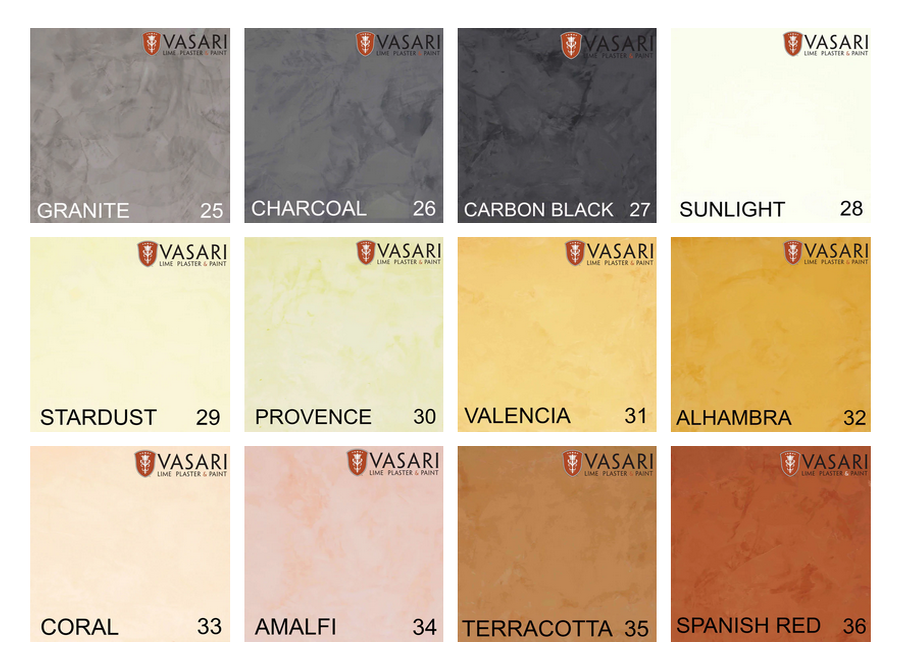
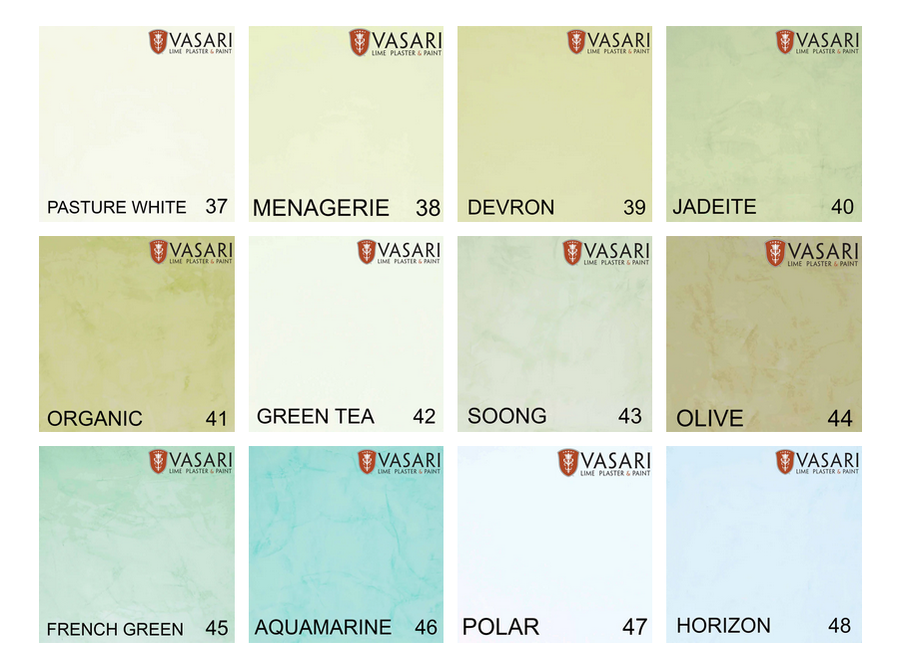
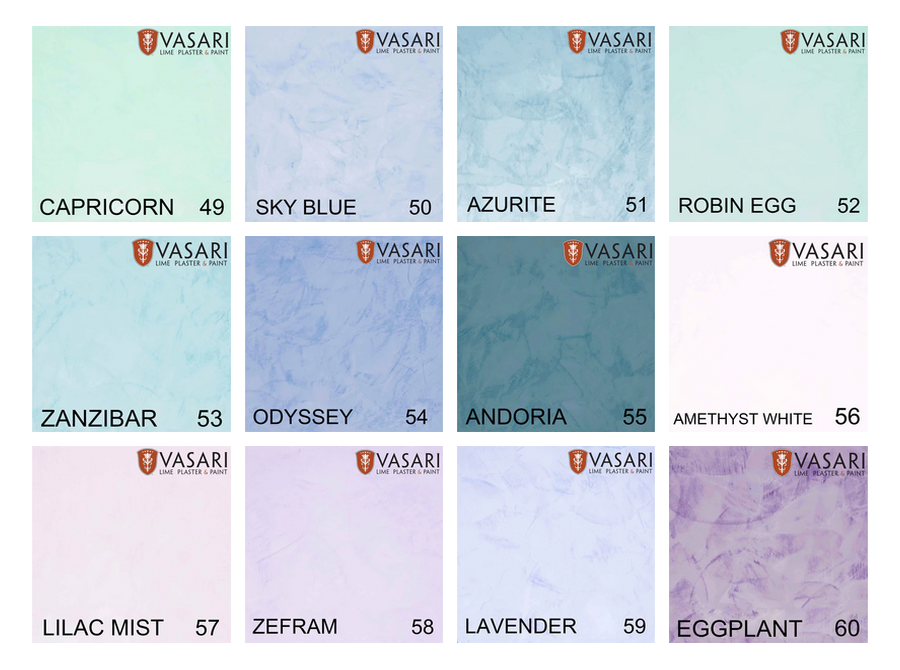
    • Beautiful Color Possibilities- Vasari’s rich Colorants are specifically designed to work seamlessly with their plaster, allowing for a custom palette that ranges from subtle neutrals to bold statement tones. These pigments are mineral-based, ensuring long-lasting, fade-resistant color.
    • Interior or Exterior Use- Marmorino is not just for indoor elegance. It’s highly durable and can also be used for exterior facades, fireplaces, bathrooms, and even shower walls.

    Whether applied by hand for a rustic effect or burnished for a marble-like sheen, Marmorino is more than a wall finish—it’s an architectural element that elevates a space.

    Not Sure What to Expect? Try a Sample.

    Sometimes texture and tone are hard to imagine from a screen. That’s where the Vasari Marmorino Sample Board comes in. These 12″ x 12″ boards are hand-applied and pre-tinted, giving you a tactile, true-to-life preview of the finish. It’s a great tool for designers, clients, or anyone who wants to see and feel the material before committing to a full install.
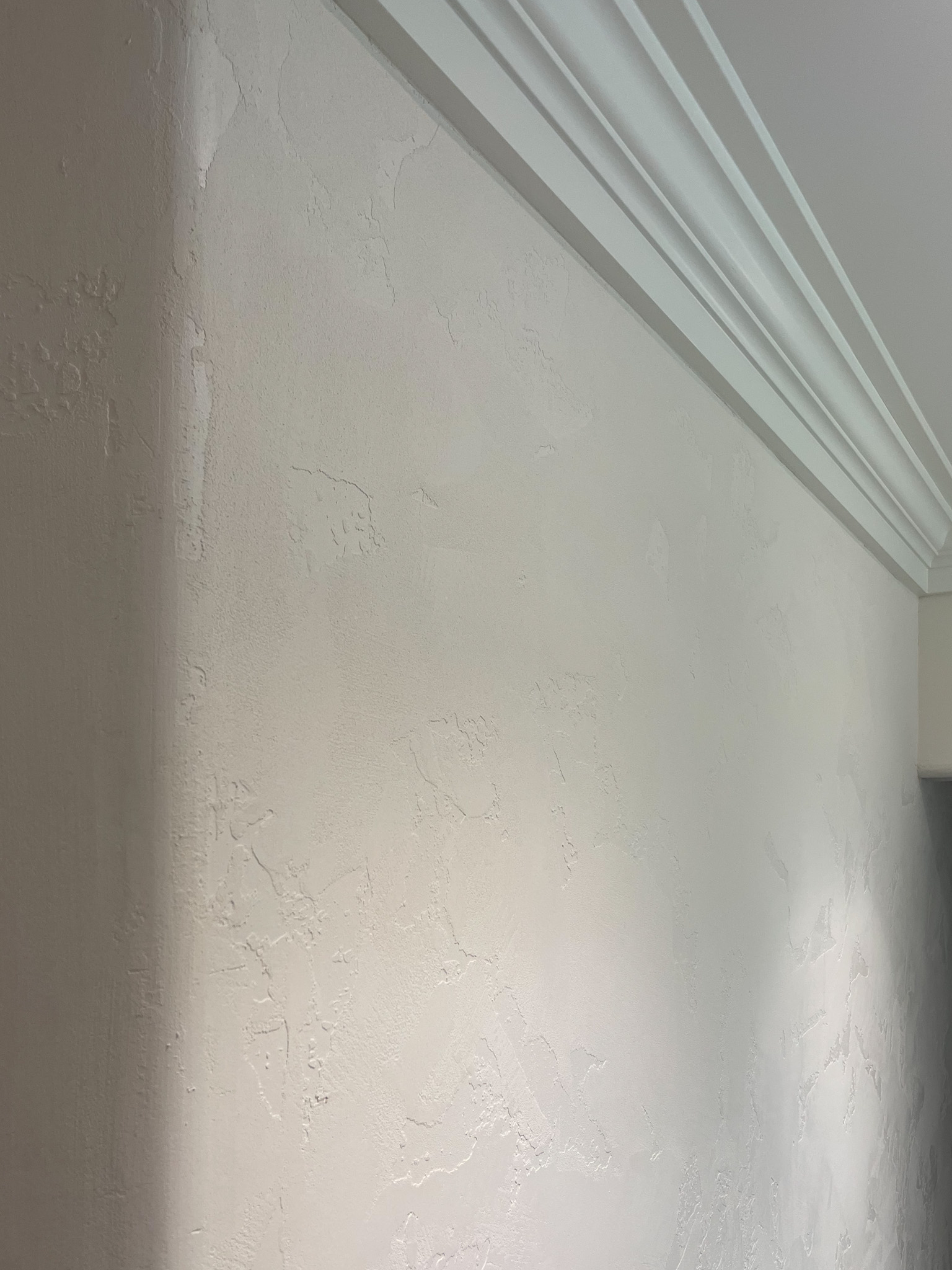
    Vasari Marmorino plaster sample board with #2 Linen Colorant showing smooth lime-based finish texture
    Vasari Marmorino and #2 Linen Colorant

    How to Apply Vasari Marmorino

    Marmorino can be applied by both professionals and experienced DIYers. Whether you are hand-troweling a subtle finish or layering for more texture, the process is part of what makes lime plaster so rewarding.

    • For best results, start with Vasari Primer to ensure adhesion and even color absorption.
    • After applying the plaster, you can leave it matte, lightly burnish for a low sheen, or finish with Beeswax Polish for added depth and protection.

    A Look at the Full Vasari Collection

    Vasari doesn’t stop at Marmorino. They offer a full suite of artisan plasters, all lime-based and crafted with the same commitment to quality:

    • Veneziano Veneziano is made with natural limestone and powdered marble. It does not contain sand. Veneziano creates a smooth feel with beautiful deep variation. Depending on application, it can be left matte with a plastic trowel or given a medium to high sheen using a metal trowel. You can achieve a highly reflective finish with this product, even without wax. For a high gloss, we recommend applying a burnished third skim coat.
    • Carrera Carrera is made with natural limestone and powdered marble. It contains both fine and coarse sand. Applied thick for a medium to high textured feel, Carrera is used for a rustic old world look with high variation. When burnished it can take on a smoother look with low sheen.
    • Lime Paint Vasari Lime Paint is made from natural limestone and powdered marble, which enables it to take on the same properties of our plasters. It can be brushed, rolled, or sprayed just like conventional paint but is much more versatile. A medium texture can be achieved with a brush, or it can be troweled smooth, left matte or burnished to a medium sheen. Create a gorgeous Lime Wash by simply diluting Vasari Lime Paint with water.
    • Master Coat A high-performance, water-based clear topcoat designed for use over Vasari plasters when added durability and stain resistance are needed. It’s ideal for high-traffic areas, kitchens, and bathrooms. Master Coat provides a satin finish that protects without compromising the beauty of the natural plaster underneath.
    • Primer, Sealer & Wax Finishes Complete your project with Vasari’s compatible prep and finishing products that protect and enhance the plaster’s character over time.
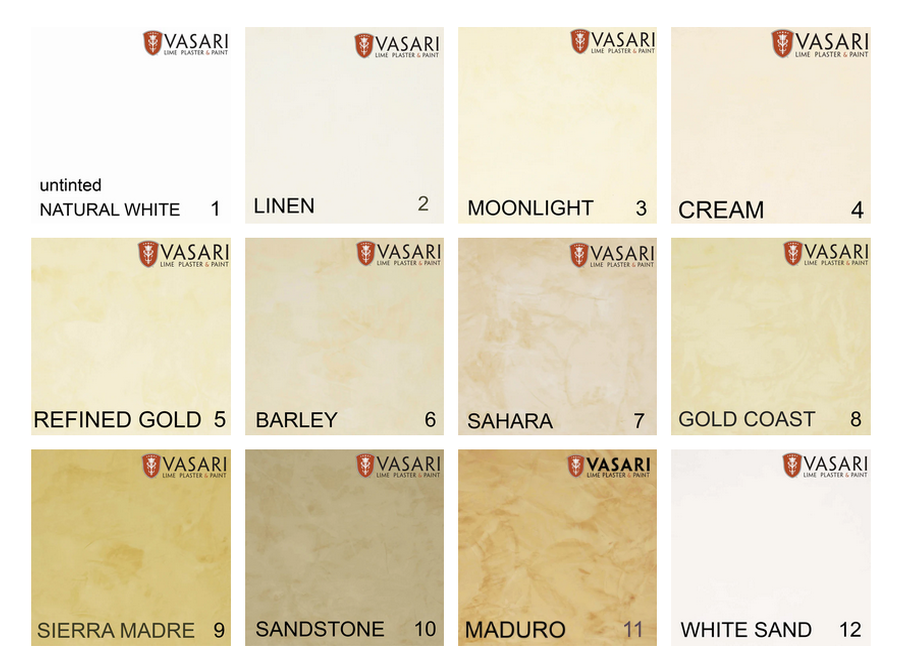
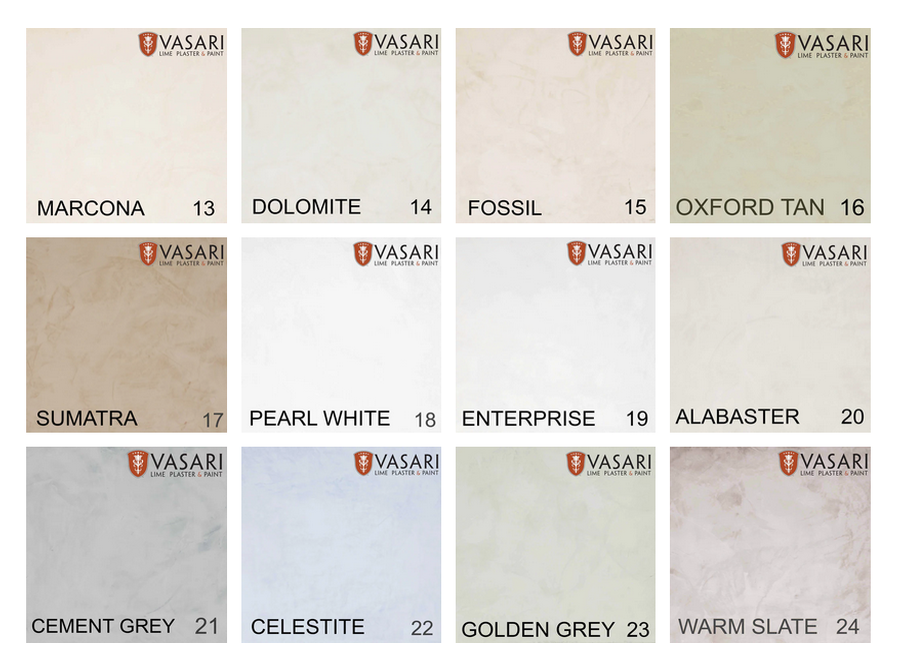
    Frequently Asked Questions

    Is Marmorino safe for bathrooms and showers?

    Yes! Marmorino is naturally mold-resistant and breathable. When sealed properly with Vasari Sealant or Beeswax Polish, it’s ideal for bathrooms and even showers.

    Can I order Vasari Marmorino online?

    Absolutely. You can purchase Marmorino Plaster and Colorants directly through Vasari’s website or start with a Sample Board to explore finishes first.

    How is Marmorino different from other plasters?

    Unlike synthetic or acrylic plasters, Marmorino is made from natural slaked lime and marble, offering a finish that’s breathable, VOC-free, and rich with character.

    Can Marmorino be applied over drywall or painted surfaces?

    Yes, but proper prep is key. We recommend starting with Vasari Plaster Primer to ensure even adhesion and color absorption. This helps create the ideal surface for Marmorino application.

    Is this a DIY-friendly product?

    While professional application yields the most refined results, many experienced DIYers have success with Vasari products. Vasari even offers tutorial videos and guides for those who want to learn.

    How do I maintain Marmorino plaster walls?

    Marmorino is very low maintenance. It naturally resists dust and mildew, but for added protection and a light sheen, consider applying Vasari Soap or Beeswax Polish annually in high-use areas.

    What kind of aesthetic does Marmorino suit best?

    Its versatility shines in everything from Mediterranean and Tuscan-inspired interiors to sleek modern or minimal spaces. Whether rustic or refined, Marmorino adapts beautifully to your vision.

    Can Marmorino be used in kitchens or behind stovetops?

    Yes, Marmorino is a great choice for kitchens due to its breathability and natural antimicrobial properties. For areas exposed to steam or splashes, sealing with Beeswax Polish or Vasari Soap is recommended for added durability and wipe ability.

    How long does Marmorino take to cure?

    While it dries to the touch relatively quickly, full curing can take up to 30 days. During this time, it’s best to avoid excessive moisture and scrubbing to allow the plaster to carbonate fully and harden naturally.

    What makes Vasari’s Marmorino different from other lime plasters on the market?

    Vasari products are handcrafted in small batches using authentic ingredients—natural lime, marble powder, and mineral pigments—with no synthetic fillers. This results in superior depth, workability, and longevity.

    Can Vasari Colorants be used with other plasters or paints?

    Vasari Colorants are designed to integrate seamlessly with Vasari products, but they may also be compatible with other lime-based finishes. Always test first for color accuracy and performance.

    Is Vasari Soap still available?

    At the time of writing, Vasari Soap may no longer be available or may be undergoing a packaging update.


    Looking to incorporate natural Venetian plaster into your next remodel or custom build?

    We love specifying Vasari for clients who value beauty, sustainability, and craftsmanship. Let us help you choose the perfect finish for your space.

    Are you a Designer or Builder?

    We love collaborating on bespoke interiors that call for the richness of real materials. If you’re sourcing for a client, we can help you order sample boards or even arrange custom color matches using Vasari Colorants.
    Schedule a Free Consultation »

  • Exploring the Different Types of Fireplaces: Which One Is Right for Your Home?

    Exploring the Different Types of Fireplaces: Which One Is Right for Your Home?

    Exploring the Different Types of Fireplaces

    When it comes to choosing a fireplace, there’s more to consider than just looks. From traditional wood-burning hearths to modern electric units, today’s fireplaces come in a wide range of fuel types, features, and design styles. Whether you’re planning a new build, remodeling an existing fireplace, or simply researching your options, understanding the pros and cons of each type can help you make an informed decision.

    In this section, we break down the most popular types of fireplaces—wood, gas, electric, pellet, and more—to help you find the best fit for your lifestyle, home layout, and heating needs. Here’s a closer look at each option and what makes it unique:

    Wood-Burning Fireplace

    The classic choice. Uses logs and real flame. Typically built into a masonry chimney.

    Pros:

    • Authentic ambiance with real flames, crackle, and scent
    • No electricity/gas required
    • High visual appeal, especially in traditional homes

    Cons:

    • Requires a chimney and regular maintenance (cleaning, inspections)
    • Less efficient—much of the heat escapes through the chimney
    • More emissions and environmental impact than other types
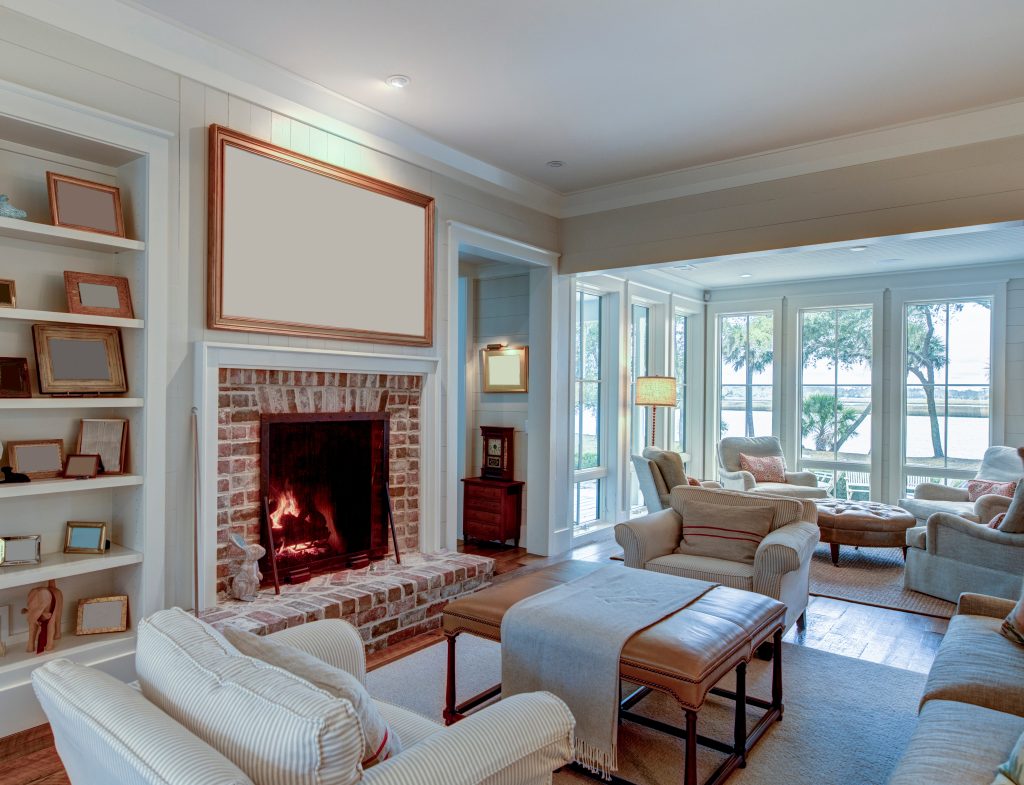
    Traditional wood-burning fireplace in coastal living room with real flames and rustic charm
    A traditional wood-burning fireplace adds cozy charm and rustic elegance to this coastal living room, creating a timeless focal point for open-concept home designs.

    Gas Fireplace (Vented)

    Fueled by natural gas or propane, these units mimic a real flame but use ceramic logs or glass media. Vented models exhaust combustion gases outdoors.

    Pros:

    • Convenient—turn on/off with a switch or remote
    • Cleaner-burning than wood
    • Provides consistent heat
    • Realistic flame appearance

    Cons:

    • Requires gas line installation
    • Still needs venting/chimney system
    • Less eco-friendly than electric
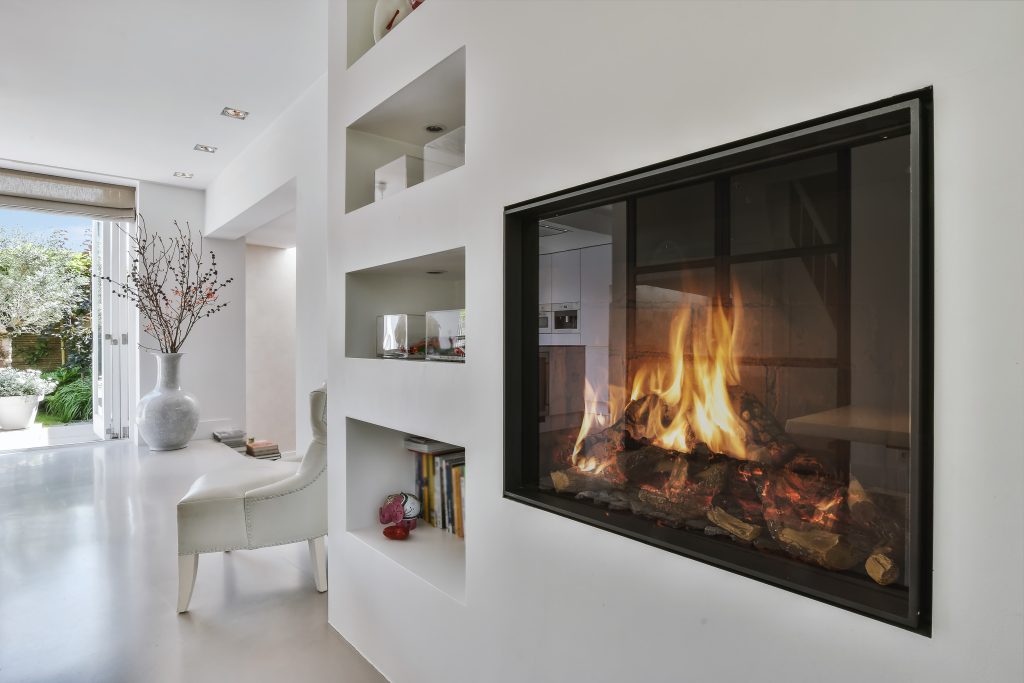
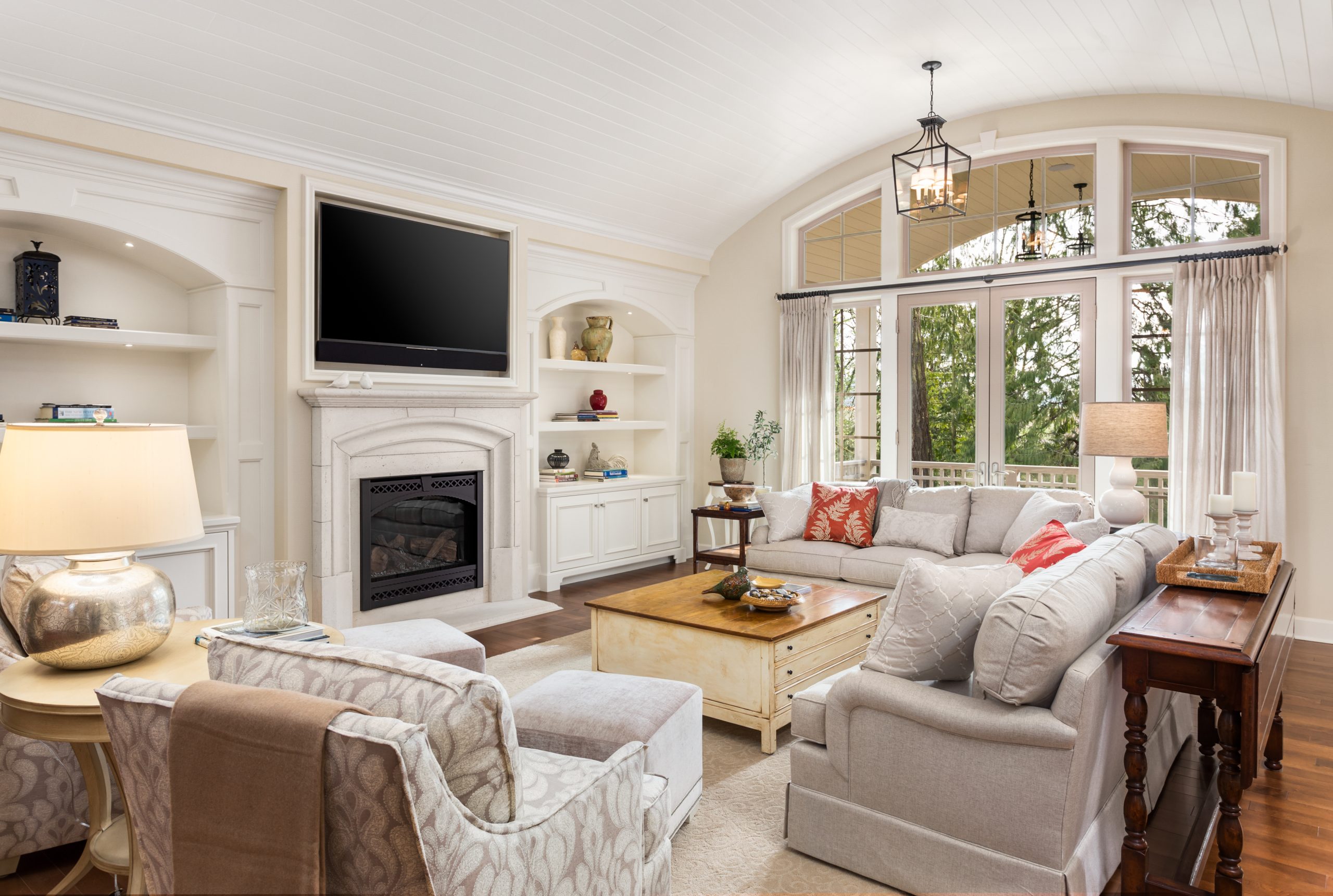
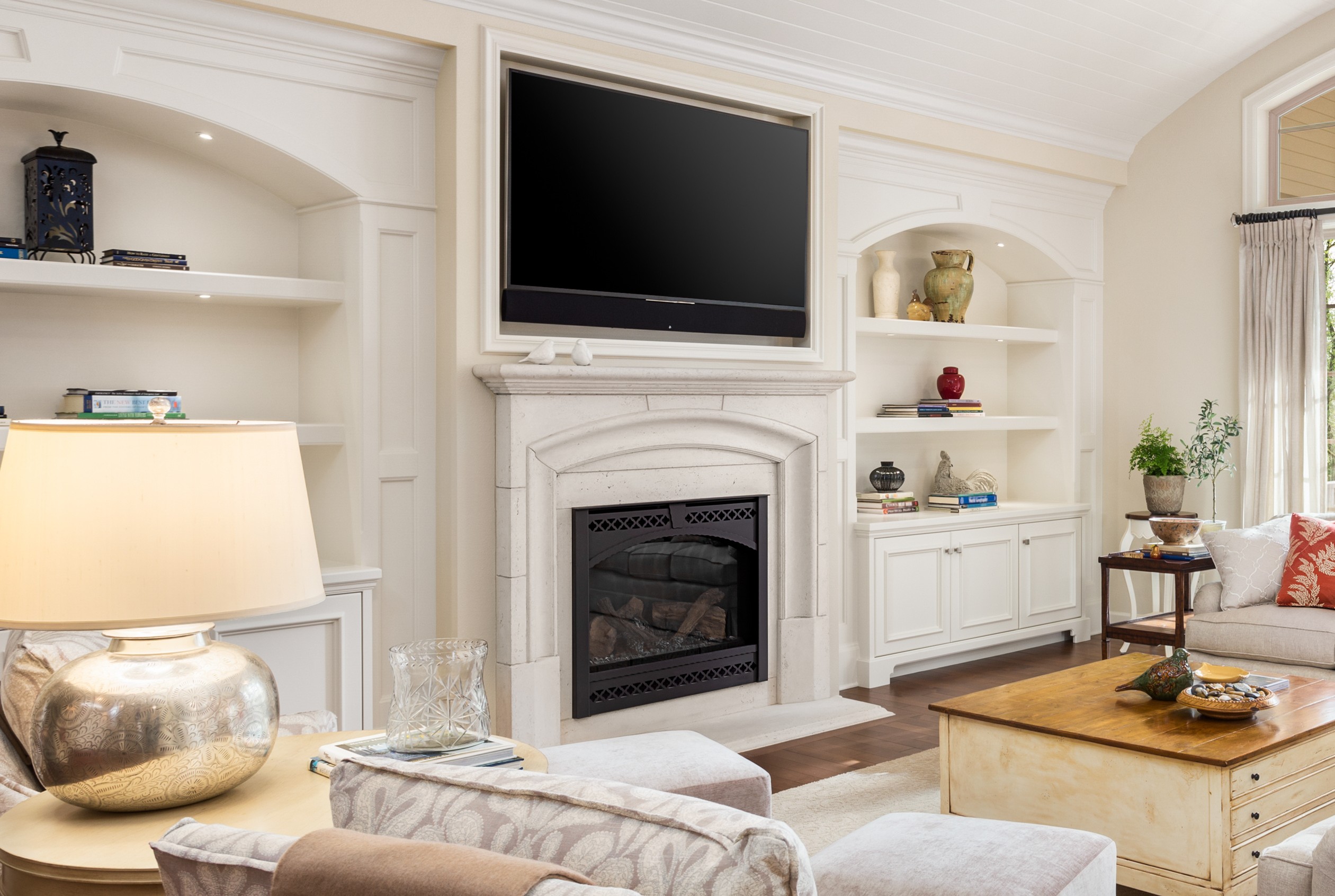
    Sleek vented gas fireplace in contemporary living room with ceramic logs and efficient heating
    This sleek gas fireplace (vented) design adds warmth and style to a contemporary living room, offering the beauty of real flames with the convenience of clean, efficient heating.

    Gas Fireplace (Ventless / Vent-Free)

    Like vented gas fireplaces, but they don’t require a chimney or flue. They release combustion byproducts directly into the room.

    Pros:

    • Easier and cheaper to install
    • High efficiency—almost all heat stays in the room
    • Good option for remodels without chimney access

    Cons:

    • Not allowed in all jurisdictions (check local code)
    • Adds moisture and low levels of combustion gases to the air
    • Less realistic flame quality
    Sleek ventless gas fireplace in modern minimalist home with efficient heating and flexible installation
    This sleek gas fireplace (ventless / vent-free) delivers effortless warmth and contemporary style, offering a flexible heating solution perfect for open-concept and modern minimalist homes.

    Electric Fireplace

    Uses electricity to simulate flame visuals (LED, projection) and produce heat via a fan-forced heater or infrared element.

    Pros:

    • No gas, chimney, or venting required
    • Easy to install anywhere—great for apartments or remodels
    • Safe for kids and pets
    • Low maintenance

    Cons:

    • Flame is simulated, not real
    • Dependent on electricity
    • Lower heat output than gas or wood options
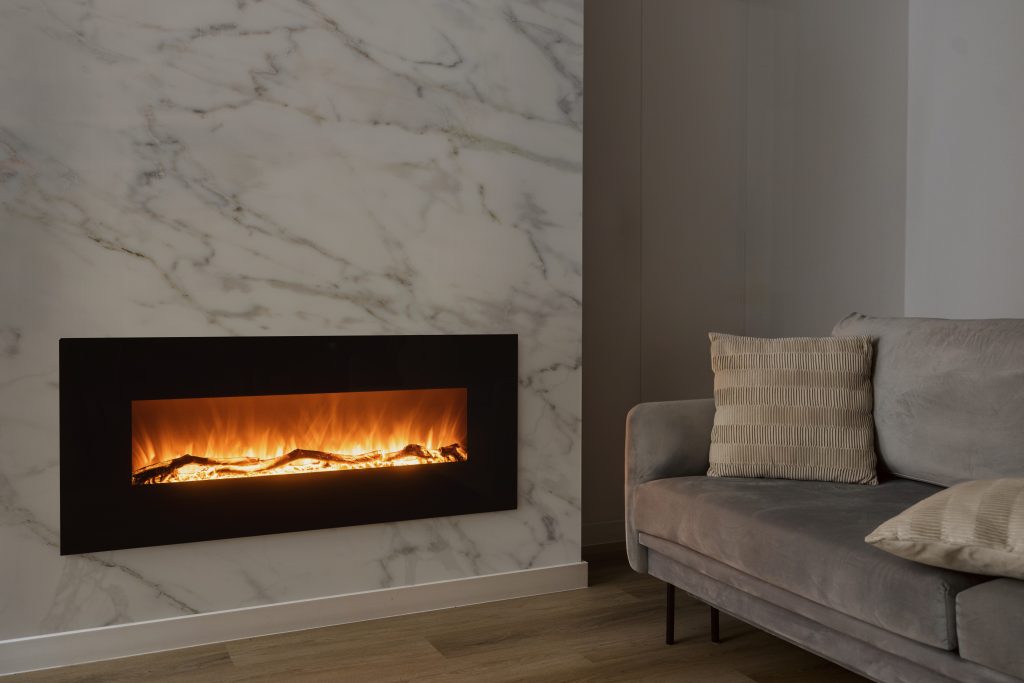
    Modern electric fireplace mounted on marble wall in cozy living room with LED flame effect
    Modern electric fireplace is mounted on a marble wall in cozy living room.

    Pellet Fireplace (Stove or Insert)

    Burns compressed wood pellets. Often freestanding or inserted into an existing firebox. Requires electricity for the feeder system.

    Pros:

    • High-efficiency, low-emission
    • Renewable fuel source
    • Long burn times with automatic feeding

    Cons:

    • Requires electricity
    • Pellet storage and occasional hopper filling
    • Upfront cost can be higher than standard wood/gas
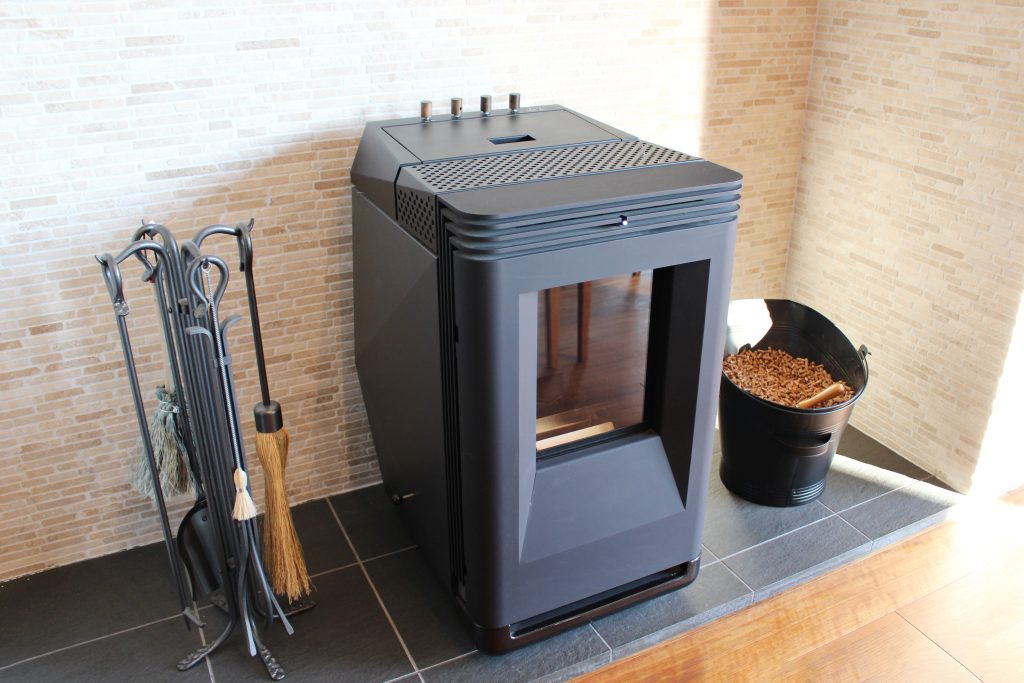
    Sleek pellet fireplace stove with high efficiency, eco-friendly heating and modern technology
    This sleek pellet fireplace (stove or insert) offers a highly efficient and eco-friendly heating solution, combining modern technology with the cozy appeal of a traditional hearth.

    Ethanol Fireplace

    Burns bioethanol fuel. No chimney or venting needed. Available in tabletop, wall-mounted, or built-in styles.

    Pros:

    • Clean-burning and eco-friendly
    • Stylish, modern designs
    • Ventless and mobile—flexible placement

    Cons:

    • Limited heat output—best for ambiance
    • Fuel can be pricey
    • Must be refilled manually
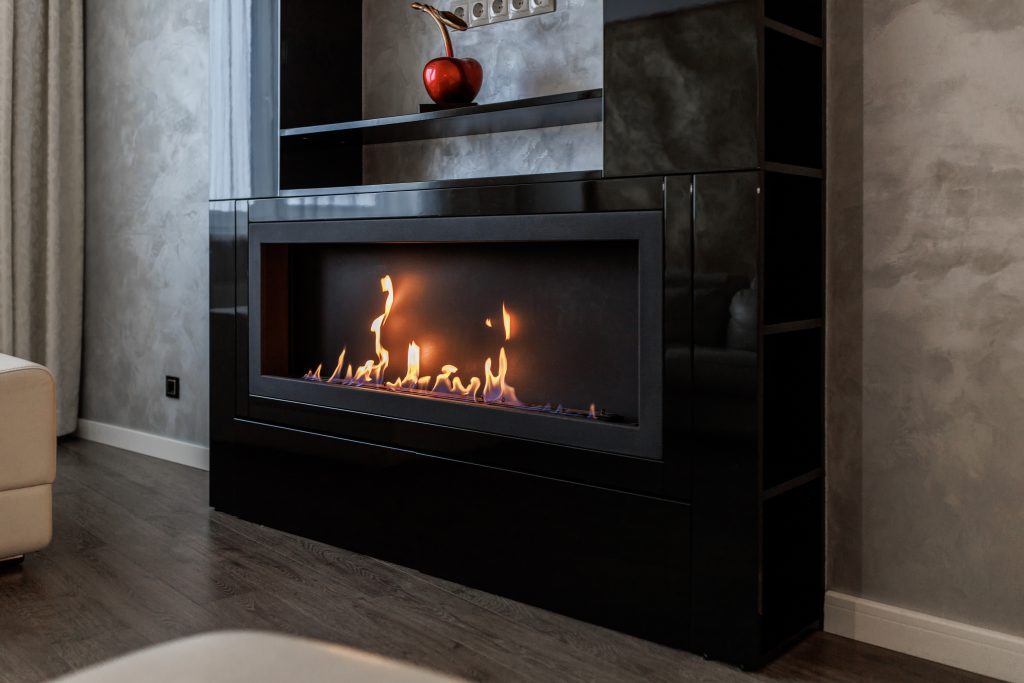
    Sleek ethanol fireplace with clean-burning ventless flame in contemporary living space
    This sleek ethanol fireplace offers a clean-burning, ventless flame that brings modern elegance and warmth to contemporary living spaces.

    Outdoor Fireplaces (Wood, Gas, or Electric)

    Exterior fireplace options for patios or yards. Available in all fuel types depending on setup and access.

    Pros:

    • Enhances outdoor living space
    • Can be a focal point for entertaining
    • Wide range of design and fuel options

    Cons:

    • Subject to weather and climate use limits
    • May require special permits depending on area
    • Can be costly if built-in
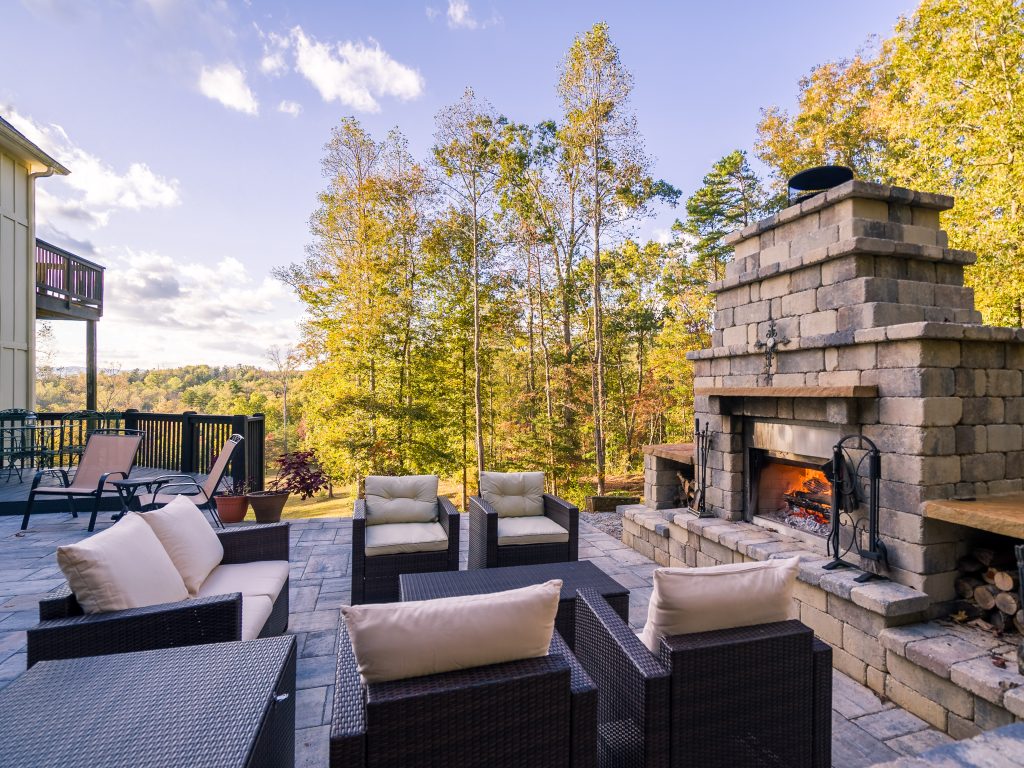
    Stunning stone outdoor fireplace transforming patio into cozy year-round gathering space
    This stunning stone outdoor fireplace showcases how outdoor fireplaces (wood, gas, or electric) can transform any patio into a cozy, year-round gathering space.

    The Right Choice For You

    With so many fireplace options available, finding the right one isn’t just about appearance—it’s about how it fits into your daily life. Your home’s layout, your family’s needs, and even your design style all play a role in determining the best choice. Whether you’re looking for a low-maintenance solution, a statement feature, or an eco-friendly upgrade, this section will help you narrow down your options.

    Here’s how to match your ideal fireplace with the way you live and the space you live in:

    Family-Friendly with Kids or Pets? → Electric or Vented Gas

    Why it fits: These options offer the safety of cool-touch glass or enclosed flames, and they don’t require real fire or combustion in the living space.

    Ideal fireplace types:

    • Electric Fireplace
    • Vented Gas Fireplace

    Bonus tip: Wall-mounted electric units are sleek and out of reach for little hands or wagging tails.

    Cozy Ambiance for Entertaining? → Wood-Burning or Ethanol

    Why it fits: If the feel of a real flame matters most—crackling logs, flickering firelight—these provide maximum ambiance.

    Ideal fireplace types:

    • Wood-Burning Fireplace
    • Ethanol Fireplace

    Bonus tip: Ethanol options are especially useful in modern homes without chimneys.

    Environmentally Conscious Living? → Pellet or Electric

    Why it fits: You’re looking for efficient, low-emission options. Pellet stoves use renewable fuel, and electric models draw from your home’s energy source (or even solar).

    Ideal fireplace types:

    • Pellet Fireplace
    • Electric Fireplace

    Bonus tip: Look for EPA-certified pellet units for the cleanest burn.

    Minimal Renovation or Apartment Living? → Electric or Ventless Gas

    Why it fits: If you can’t install a chimney or run gas lines, go vent-free. These options require little to no structural modification.

    Ideal fireplace types:

    • Electric Fireplace
    • Ventless Gas Fireplace

    Bonus tip: Many electric units are plug-and-play—perfect for renters.

    Traditional Home with Existing Chimney? → Wood or Vented Gas Insert

    Why it fits: You can make the most of an existing masonry fireplace by retrofitting it with an insert that improves efficiency.

    Ideal fireplace types:

    • Wood-Burning Fireplace
    • Vented Gas Insert

    Bonus tip: Gas inserts offer remote control and better insulation than open wood-burning setups.

    Modern or Minimalist Aesthetic? → Linear Gas or Wall-Mounted Electric

    Why it fits: Clean lines and frameless installations complement contemporary interiors beautifully.

    Ideal fireplace types:

    • Linear Gas Fireplace
    • Wall-Mounted Electric Fireplace

    Bonus tip: Consider glass media or smooth concrete surrounds for a sleek finish.

    Outdoor Living Enthusiast? → Gas, Wood, or Electric Outdoor Units

    Why it fits: Create a year-round backyard focal point with weather-resistant units designed for exterior use.

    Ideal fireplace types:

    • Outdoor Wood Fireplace
    • Outdoor Gas Fireplace
    • Outdoor Electric Heater with Flame Effects

    Bonus tip: Match the fuel source to what’s most accessible (e.g., natural gas line vs. available firewood).


    Ready to explore your fireplace options? Whether you’re remodeling an existing hearth or starting from scratch, our team can help you choose the right fireplace for your home.

    See Fireplace Styles & Options »

  • Fireplace Terminology Made Simple: Click to Learn Each Part

    Fireplace Terminology Made Simple: Click to Learn Each Part

    An Interactive Guide to the Fireplace

    Whether you’re considering a fireplace remodel or just exploring design ideas for your home, understanding the different parts of a fireplace can be incredibly helpful. From fireboxes and hearths to mantels, surrounds, and everything in between, each component plays an important role in both form and function. This page is designed to give you a clearer picture—literally. Click through our interactive fireplace diagram to discover what each piece is, how it contributes to the overall design, and what to consider when planning your own project. If you’ve ever wondered “What are the parts of a fireplace called?”—you’re about to find out, one piece at a time.

    Interactive fireplace diagram — click each label to learn what each part is called
    Overmantel The section above the mantel shelf, often extending to the ceiling. It adds height and visual impact, and can be enhanced with decorative panels, molding, or built-in shelving.
    Mantel A decorative shelf positioned above the firebox opening. It can be a floating feature or supported by legs or pilasters for added architectural detail.
    Header (Undermantel) Spans the space above the firebox between the pilasters. It connects the vertical elements and supports the mantel shelf, serving as both a structural and decorative feature.
    Pillasters (Legs) The vertical elements on either side of the firebox that support the mantel and frame the opening. They can be simple or ornate, adding architectural character and balance.
    Surround Frames the perimeter of the firebox, usually extending 8 to 12 inches around it. Its purpose is to safeguard the interior from heat and must be made of non-combustible materials.
    Plinth The base block at the bottom of each pilaster or leg, providing structural support and a visual foundation. Often slightly wider than the pilaster above, it adds grounding and completes the architectural detailing.
    Fireplace Insert An enclosed unit that fits within the firebox. Electric and gas fireplaces typically include an insert with extra features such as glass doors or built-in ventilation components.
    Hearth Sits at the base of the fireplace, typically extending 16 to 18 inches beyond the firebox. It shields surrounding flooring from heat and embers, and must be made from non-combustible materials.

    Hover to highlight, click to learn about each part

    A Glossary of the Parts of a Fireplace

    Overmantel

    The overmantel is the section above the mantel shelf, often extending to the ceiling. It adds height and visual impact to the fireplace, and can be left simple or enhanced with decorative panels, molding, or even built-in shelving or artwork.

    Mantel

    The mantel is a decorative shelf positioned above the firebox opening. It can either be a floating feature or supported by legs or pilasters for added architectural detail.

    Header (Undermantel)

    The header, or undermantel, spans the space above the firebox between the pilasters. It connects the vertical elements and supports the mantel shelf, serving as both a structural and decorative feature in the fireplace surround.

    Pillasters (Legs)

    Pilasters or legs are the vertical elements on either side of the firebox that support the mantel and frame the fireplace opening. They can be simple and understated or more ornate, adding architectural character and balance to the overall surround design.

    Surround

    The surround frames the perimeter of the firebox, usually extending 8 to 12 inches around it. Similar to the hearth, its purpose is to safeguard the interior from the fireplace’s heat and must be made of non-combustible materials.

    Plinth

    The plinth is the base block at the bottom of each pilaster or leg, providing both structural support and a visual foundation for the fireplace surround. Often slightly wider than the pilaster above, it adds a sense of grounding and completes the architectural detailing.

    Fireplace Insert

    Traditional masonry fireplaces often consist of just a firebox. In contrast, electric and gas fireplaces typically include an insert—an enclosed unit that fits within the firebox and may contain extra features such as glass doors or built-in ventilation components.

    Hearth

    The hearth sits at the base of the fireplace, typically extending 16 to 18 inches beyond the firebox onto either a raised platform or a floor-level surface. It’s designed to shield the surrounding flooring from heat and stray embers and must be constructed from non-combustible materials.


    Now that you know the anatomy of a fireplace, let’s find the one that fits your home just right. From cozy wood-burning classics to sleek electric options, we’ve got you covered.

    See Fireplace Styles & Options »

  • The Pros and Cons of Open Floor Plans: Why It’s Not Always the Best Choice

    The Pros and Cons of Open Floor Plans: Why It’s Not Always the Best Choice

    Open floor plans have been a major trend in modern home design for years. With their spacious feel, natural flow, and bright atmosphere, it’s easy to see why many homeowners and designers gravitate toward this layout. However, despite the widespread popularity, open floor plans aren’t always the best solution for every space or lifestyle. Here’s a closer look at the advantages and disadvantages of open floor plans, and why it might not be the right choice for you.

    The History of the Modern Open Floor Plan

    One of the earliest champions of the open floor plan in residential architecture was Frank Lloyd Wright. Building on the principles of Charles and Henry Greene and the shingle style movement, Wright reimagined the home’s layout to promote connection and flow. His designs often featured a centralized kitchen that opened directly into shared living and dining areas—an intentional shift meant to bring the homemaker out of isolation and into the social heart of the home.

    As Wright put it, the housewife could now act as a “gracious hostess,” rather than being confined to the role of a “kitchen mechanic” tucked behind closed doors. This concept gradually gained traction, and by the 1970s, open kitchen-living spaces had become especially popular in American homes.

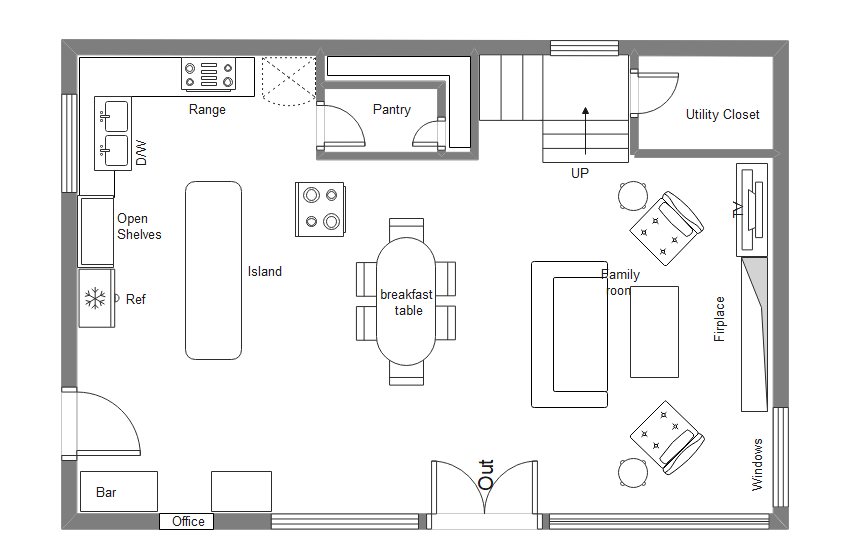
    Open floor plan architectural diagram showing a kitchen flowing into living and dining areas
    Open Floor Plan

    Pros of Open Floor Plans

    Increased Natural Light – With fewer walls, natural light can easily flow through the space, creating an airy, bright, and inviting atmosphere. This can make even smaller homes feel larger and more open.

    Better Social Interaction – An open floor plan encourages socialization by removing barriers between rooms. Whether you’re cooking in the kitchen, relaxing in the living room, or entertaining guests, everyone can interact and communicate without feeling confined.

    Greater Flexibility – The lack of walls means more flexibility in arranging furniture. You can adapt the layout to your needs, whether you’re hosting a party or just relaxing with family. This versatility is especially helpful in multi-functional spaces.

    Easier Supervision – For families with young children, an open floor plan can make it easier to keep an eye on kids while cooking or doing other tasks. It provides a clear line of sight across the home.

    Modern Appeal – Open floor plans tend to have a sleek, contemporary look, which is appealing to many homeowners. The seamless flow between living areas is often seen as more aesthetically pleasing than more traditional segmented spaces.

    Cons of Open Floor Plans

    Lack of Privacy – One of the biggest downsides to an open floor plan is the lack of privacy. Rooms are not divided, so everyone is visible and audible, which can lead to distractions, especially in households with multiple people. It may not be ideal for people who value their personal space.

    Noise Levels – Without walls to absorb sound, noise can travel freely between rooms. This can become a problem, especially in larger homes where the sounds of cooking, television, or conversations can overlap. This can disrupt quiet time or make it hard to focus in certain areas.

    Limited Storage and Organizational Space – Open floor plans often have fewer built-in storage solutions compared to more traditional layouts. With fewer walls, there are fewer places for shelves, cabinets, or closets. This can lead to clutter if you don’t make a conscious effort to organize your space.

    Heating and Cooling Challenges – Large, open spaces can make it more difficult to regulate temperature. Airflow may not be as efficient, leading to hot or cold spots. This can be costly in terms of energy use, as heating or cooling a large, open area requires more energy.

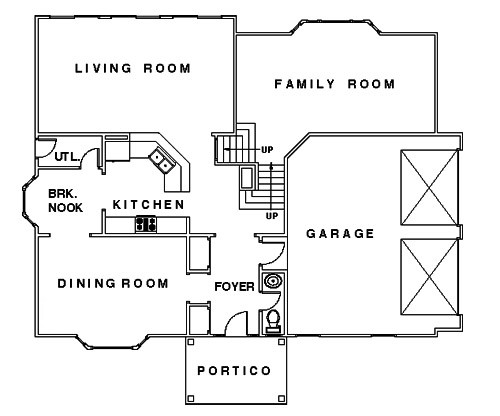
    Closed floor plan architectural diagram showing separate rooms with defined walls
    Closed Floor Plan

    Why Open Floor Plans Aren’t Always the Best Option

    Despite all the buzz around open floor plans, they might not be right for everyone. Here are a few reasons why this trendy layout might not suit your needs:

    Lifestyle and Family Needs – If you have a large family or share your space with multiple roommates, the lack of privacy could be problematic. Open floor plans can feel chaotic, especially if you have different routines or schedules.

    Noise Sensitivity – If you work from home, study, or just prefer a quieter environment, the sound transmission in an open floor plan could be disruptive. It’s harder to create quiet spaces when the sound of the TV or phone conversations easily spills over into other areas.

    Clutter and Mess – Open floor plans require a higher level of organization to avoid clutter. Without walls to hide messes, every area needs to be tidy, which might not always be practical, especially if you have children or pets.

    Cost Considerations – The construction of an open floor plan can sometimes be more expensive due to the need for structural changes or higher-quality materials to ensure that the space is cohesive and functional.

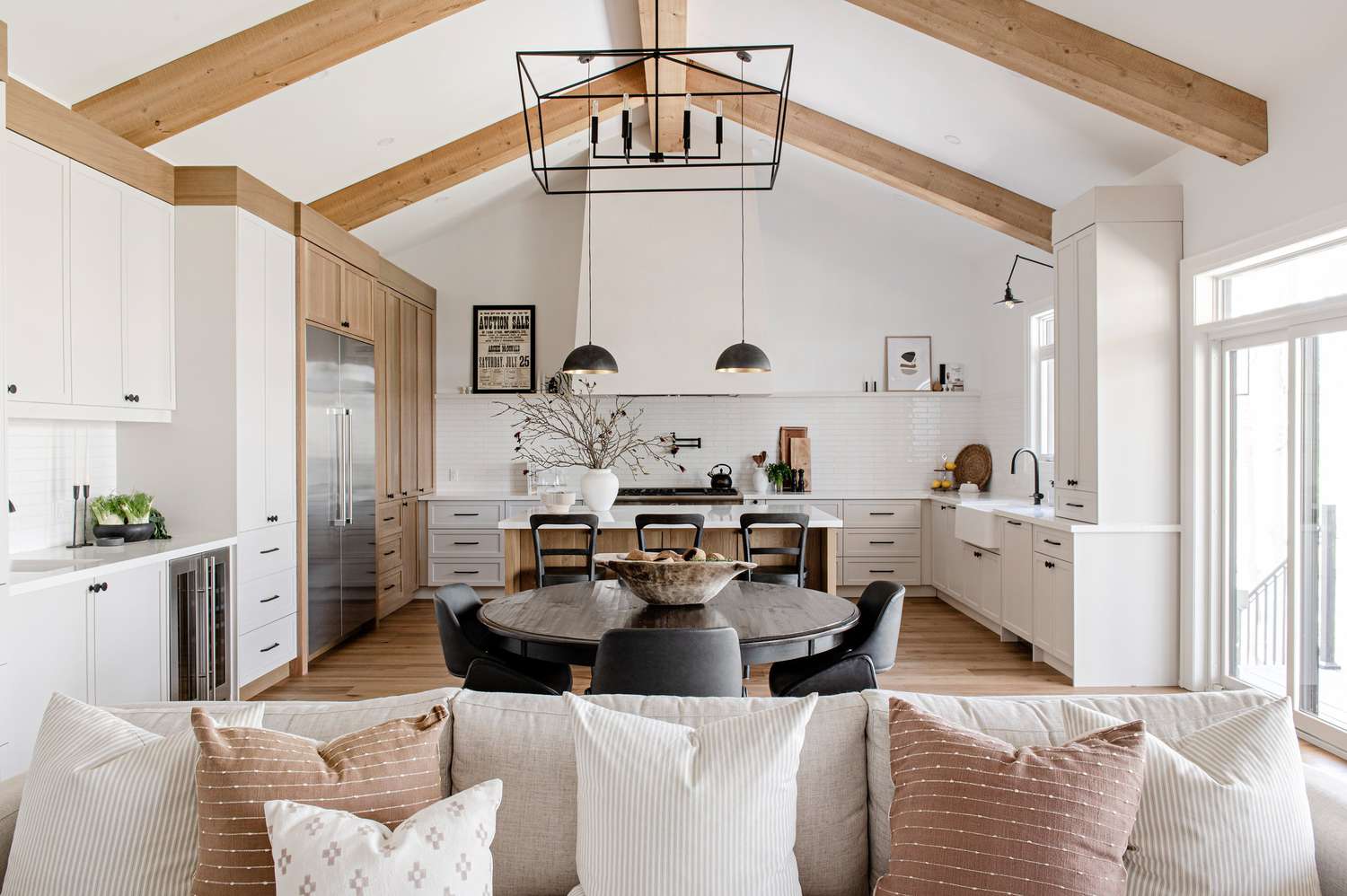
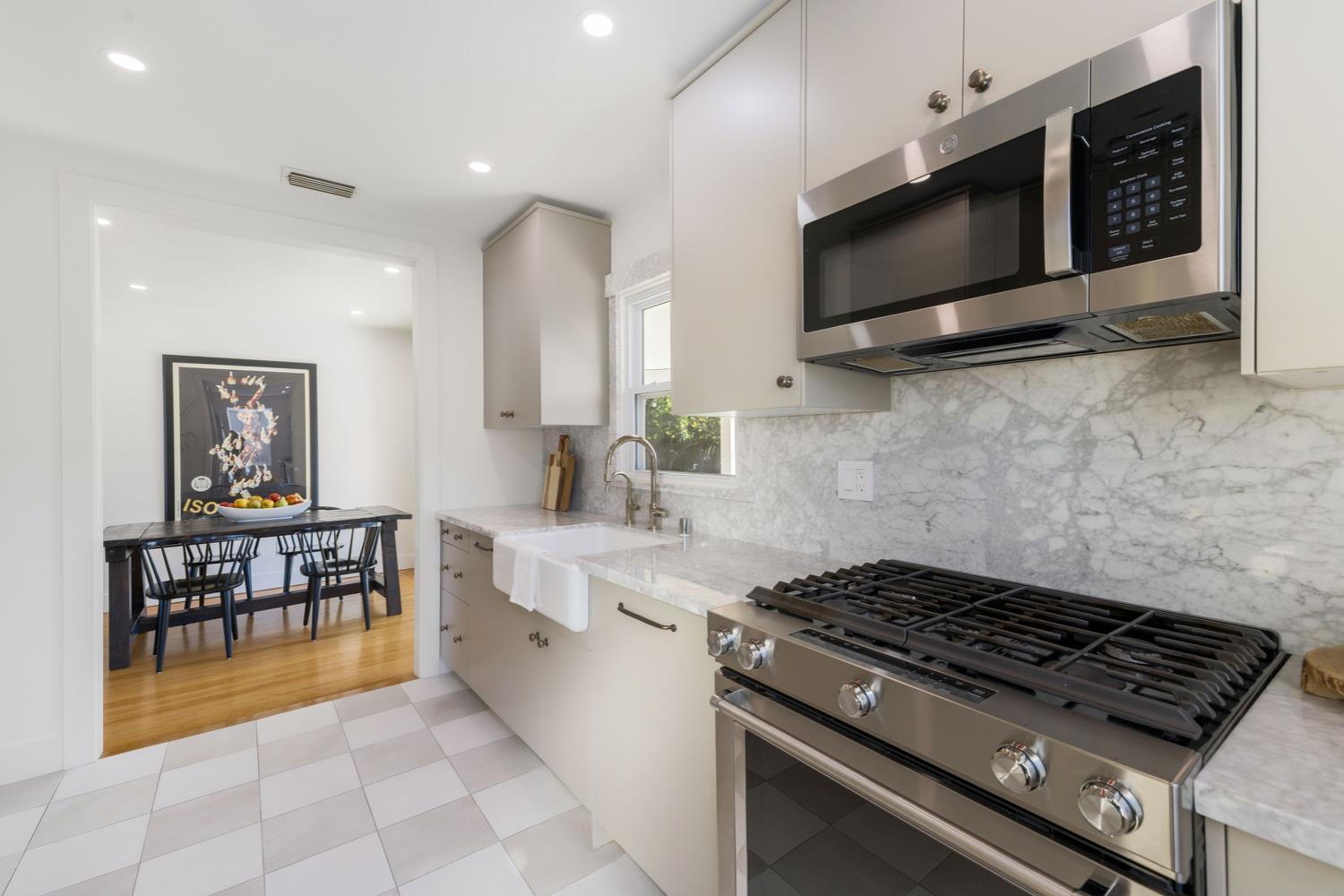
    A beautifully remodeled open-concept kitchen by Parrish Construction

    Open floor plans are definitely a great fit for some people and lifestyles. They encourage togetherness, allow more natural light, and provide a sleek, modern aesthetic. However, they aren’t always ideal for those who value privacy, peace, and order. It’s important to weigh the pros and cons carefully and assess your personal preferences and needs before jumping on the open floor plan bandwagon.

    Remember, there’s no one-size-fits-all solution. Whether you’re renovating your current space or building a new one, it’s important to consider what works best for your lifestyle. An open floor plan might be perfect for some, but it may not be the right fit for everyone.

    Can’t decide between the two? Why not have both! A great solution is to incorporate flexible design elements like pocket doors, glass partitions, or sliding barn doors. These options allow you to open up or close off spaces as needed, giving you the best of both worlds. This way, you can enjoy the flow and light of an open floor plan when you want it, but also create privacy and separation when necessary.