Blog

  • The Power of Benefits: Enhancing Employee Wellness in Small Businesses

    The Power of Benefits: Enhancing Employee Wellness in Small Businesses

    What is Employee Wellness and Well-Being?

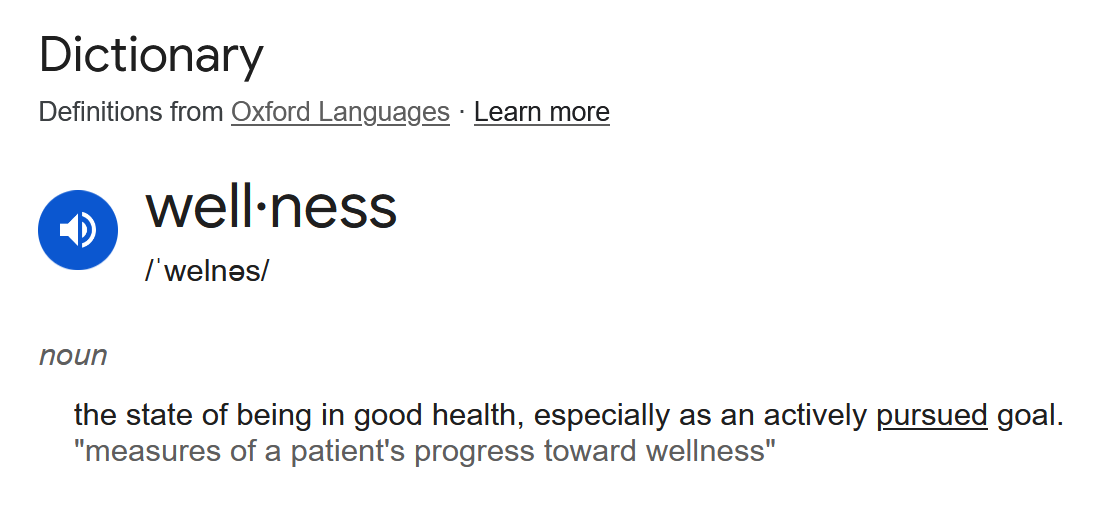
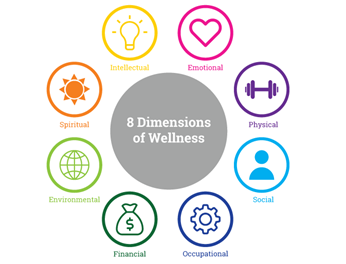
    Wellness isn’t just a buzzword in the workplace—it’s a vital investment in the long-term success of your business. The World Health Organization defines wellness as “not merely the absence of disease and infirmity” but an overall sense of well-being. Wellness isn’t just physical wellness, it’s intellectual, emotional, spiritual, environmental, financial, occupational, and social wellness. Addressing all of these aspects helps create more balanced and resilient employees.
    8 Dimensions of Wellness - Intellectual, Emotional, Physical, Social, Occupational, Financial, Environmental, Spiritual

    Why Does Employee Wellness Matter to Your Business?

    Unfortunately, small businesses have historically been known for having fewer or less benefits than larger companies. However, what many don’t realize is that for small businesses, it’s actually more important than ever to have strong benefits that support overall wellness. Offering strong benefits is crucial for attracting and retaining top talent, boosting employee morale, and maintaining long-term sustainability. Unlike large corporations that can rely on high salaries, small businesses can stand out by providing wellness-focused benefits, flexible work options, and comprehensive health plans. Investing in employee well-being leads to higher productivity, lower turnover, and a more engaged workforce—ultimately saving money and strengthening company culture.

    Research-Backed Benefits of Employee Wellness

    • Workers who feel supported in their well-being are significantly more engaged and productive.
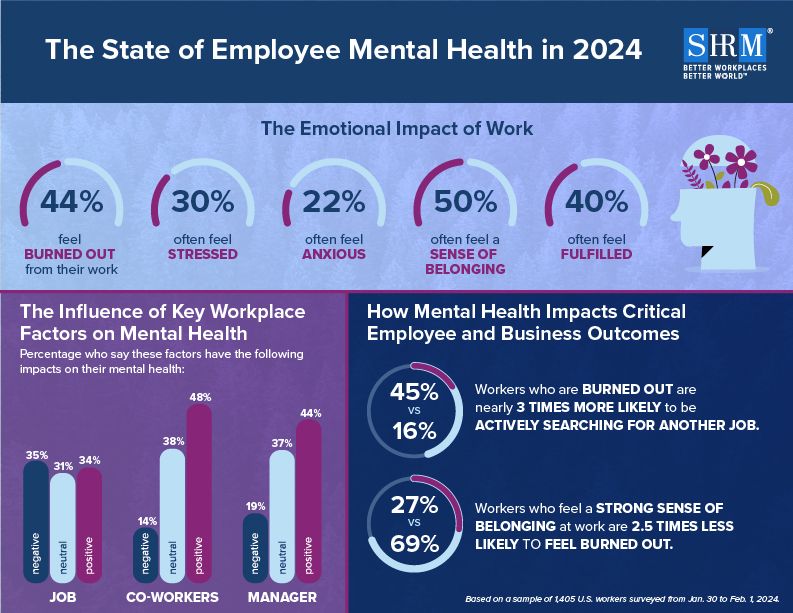
    • Employees experiencing burnout are 40% less likely to go above and beyond their job expectations compared to 56% of those who feel supported in their health and wellness.
    • Businesses that invest in employee wellness programs report lower absenteeism, fewer workplace injuries, and higher overall job satisfaction.
    SHRM Research: Factors affecting employee mental health and burnout statistics
    Source: incentfit.com

    Moreover, wellness initiatives reduce the risk of burnout, absenteeism, and turnover—all of which are costly for small businesses that lack large HR departments and budgets that bigger companies have to manage these challenges.

    Small businesses especially benefit from offering wellness programs because they can have a significant impact on productivity and job satisfaction. Research shows that employees who are mentally and physically well perform better, are more engaged, and are less likely to burn out or leave their jobs. For small businesses that typically have fewer resources, fostering employee wellness can be the key to maintaining a loyal, high-performing team.

    Well-being is closely linked with health and productivity. Research shows that employees who are in good physical, mental, and emotional health are more likely to deliver optimal performance in the workplace than employees who are not. Moreover, wellness initiatives reduce the risk of burnout, absenteeism, and turnover—all of which are costly for small businesses that lack the large HR departments and budgets that bigger companies have to deal with these challenges.1

    How Can Small Businesses Support Employee Wellness?

    While large corporations may have more resources, small businesses still have a wide range of options to offer impactful wellness benefits. Here’s how small businesses can promote wellness in their employees:

    Pension Plans (e.g., SEP Employer Contributions)

    A great way to offer financial security is through pension plans. Small business owners can utilize SEP (Simplified Employee Pension) Plans, which allow for larger contributions than typical 401(k)s, offering a tax advantage to the business and a better retirement plan for the employees.

    • Small businesses can contribute up to 25% of an employee’s compensation or $69,000 (in 2024), whichever is lower.2
    • Unlike traditional 401(k) plans, SEPs are easier to set up and have lower administrative costs, making them more accessible for small businesses.

    Advantages: Contributions are tax-deductible for the business. Employees are immediately 100% vested in the contributions, which improves retention.

    Health Savings Accounts (HSAs)

    HSAs offer employees a tax-advantaged way to save for medical expenses. Offering a match for HSA contributions is an attractive option for small businesses looking to give employees a valuable benefit without a large cost. HSAs are available to employees enrolled in a High Deductible Health Plan (HDHP).

    For 2024, contribution limits are3:

    • $4,150 for individuals
    • $8,300 for families
    • $1,000 catch-up contribution for those over 55

    Employer Match: While not required, offering a match helps employees grow their savings faster and reduces taxable income for both parties.

    Advantages: Tax-free growth and withdrawals for qualified medical expenses. Contributions reduce taxable income for employees.

    Paid Time Off (PTO)

    PTO is essential for maintaining a balanced and productive workforce. Offering vacation time, sick days, or personal days allows employees to rest and recharge, ultimately reducing burnout and increasing long-term productivity. While no federal law mandates PTO in the U.S., many states have specific regulations (e.g., California requires paid sick leave).4

    Flexible Work Schedules and Remote Options

    Allowing employees the flexibility to work from home or adjust their hours can help them maintain a work-life balance. For small businesses, this flexibility shows employees that they are valued and trusted, improving morale and reducing stress. Post-pandemic, flexible work arrangements have become an expected benefit.

    Challenges: Cybersecurity risks with remote work. Maintaining company culture and collaboration.

    Comprehensive Health Plans

    Offering medical, dental, and vision coverage ensures that your employees can access healthcare when needed, without having to worry about the financial strain. Health plans may vary in scope and cost, but even basic coverage can be a great addition to a small business benefits package.

    Small businesses can offer health insurance through the Small Business Health Options Program (SHOP), which provides tax credits to businesses with fewer than 25 employees. Types of health plans to consider: PPO (Preferred Provider Organization), HMO (Health Maintenance Organization), EPO (Exclusive Provider Organization), and HDHP (High Deductible Health Plan).

    Mental Health Support

    Providing mental health benefits, such as Employee Assistance Programs (EAPs), therapy stipends, or mindfulness training, can help employees manage stress and improve overall workplace well-being. Mental health benefits are increasingly viewed as essential, not optional.

    Options for small businesses:

    • Employee Assistance Programs (EAPs): Provide confidential counseling and support.
    • Therapy stipends: Fixed reimbursement for therapy sessions.
    • Mindfulness and resilience training: Tools for stress management and work-life balance.

    Some Additional Benefits

    Professional Development – Reimbursements offered for certifications, courses, and conferences shows that the business values growth.

    Childcare Assistance – Options include on-site childcare, stipends for daycare, or flexible spending accounts (FSAs) for dependent care.

    Financial Wellness Programs – Financial literacy workshops, student loan repayment assistance, and employer-sponsored debt counseling are all options that can reduce financial stress and improve job performance.

    Addressing Common Challenges & Solutions

    As a small business owner, you might be thinking to yourself, “I can’t afford to offer a full benefits package.” The solution to that is to start small! Start with flexible work options, PTO, or an HSA match before expanding your benefits package.

    Administering benefits isn’t as complicated as it seems, and you can work with third-party providers or payroll companies that specialize in small business benefits. If you’re not sure what benefits matter most to your employees, ask them! This is a great opportunity to survey your employees to determine which benefits most matter to them before you implement a program.

    Wellness Is an Investment in Your Business & Your Employees Future

    Providing wellness and benefits packages isn’t just a cost—it’s an investment in your company’s long-term success. For small businesses, this investment can help improve employee satisfaction, reduce turnover, and increase productivity—all of which contribute to a healthier, more successful business.

    While it may seem daunting at first, offering wellness benefits doesn’t have to be expensive. By focusing on the well-being of your employees, you build a team that is more engaged, productive, and loyal. For small businesses, that kind of investment can pay off in a big way.

    Employers must take an active role in supporting employee wellness to create a healthier, more productive workplace where everyone can thrive.

    Further Reading and Information


    References

    1. Gonzales, Matt. “Here’s How Bad Burnout Has Become at Work.” SHRM, 30 Apr. 2024, www.shrm.org.
    2. IRS. “Simplified Employee Pension Plan SEP.” Irs.gov, 2019, www.irs.gov.
    3. IRS. “Publication 969 (2018), Health Savings Accounts and Other Tax-Favored Health Plans.” Irs.gov, 2018, www.irs.gov.
    4. “Division of Labor Standards Enforcement (DLSE).” Www.dir.ca.gov, www.dir.ca.gov.
  • What to Expect When Hiring a Contractor

    What to Expect When Hiring a Contractor

    Why Should I Hire a General Contractor?

    You might be wondering—why hire a general contractor when you could DIY it with a little help from HGTV and YouTube? The answer is simple: a general contractor brings industry knowledge and expertise that go far beyond what you can learn from a video. That expertise isn’t just gained overnight—it comes from years of hands-on experience and a rigorous licensing process.

    There are many steps a general contractor must take to obtain a contractor’s license, including proof of on-the-job experience, a detailed application, and a background check. The final step is to pass the Law and Business exam and the Trade exam which test the knowledge of California contracting law, business management, and trade-specific skills. These requirements ensure that licensed contractors have the necessary experience and legal knowledge to manage projects safely and effectively.

    What to Expect from a Reputable Contractor

    • Regular and clear communication – A reputable contractor will always provide you with a clear timeline, expectations, and updates throughout the process—before, during, and after your project. While unexpected costs can arise, a professional contractor should provide an estimate and communicate any changes promptly.
    • A detailed contract – Your contract should outline the scope of work, timeline, and payment terms.
    • Proper licensing and insurance – Always vet a contractor’s experience and references. Review their licensing and insurance to ensure they are current and have no claims against them.
    • Project management and coordination – Your contractor is expected to handle all permits, inspections, material orders, and subcontractors to keep the project on schedule. They will also manage your project’s costs and schedule to ensure it comes in on time and within budget.
    • Quality work and industry knowledge – A reputable contractor will always follow all local building codes and best practices.
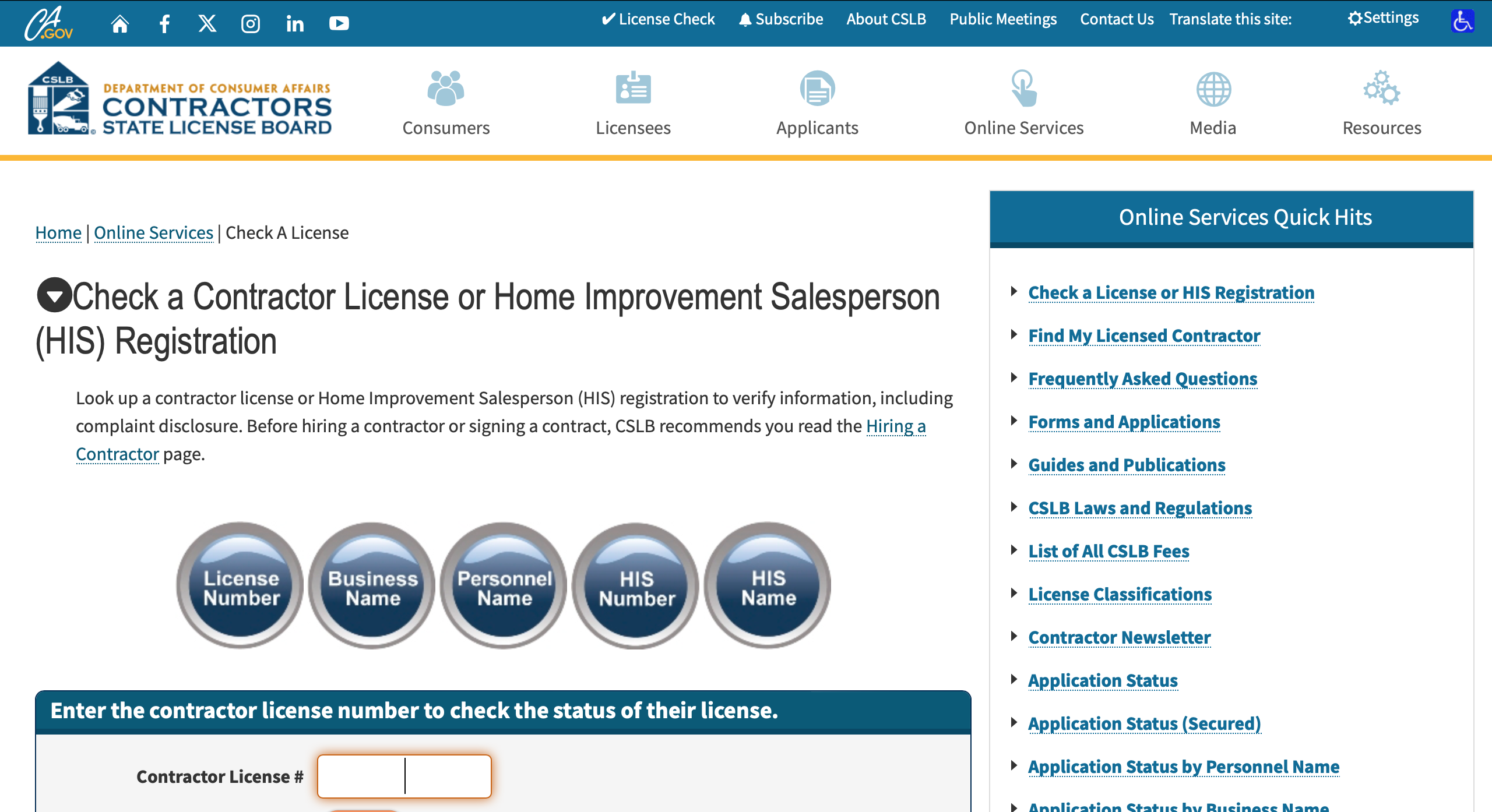
    California Contractors State License Board - Check A License

    Ensure your contractor is licensed with ease! Click here to verify: Check A License

    Red Flags to Watch For

    • Lack of a written contract
    • Unwillingness to provide references
    • Demanding large upfront payments
    • No proof of insurance or licensing
    • Poor communication or vague estimates

    When Comparing Bids

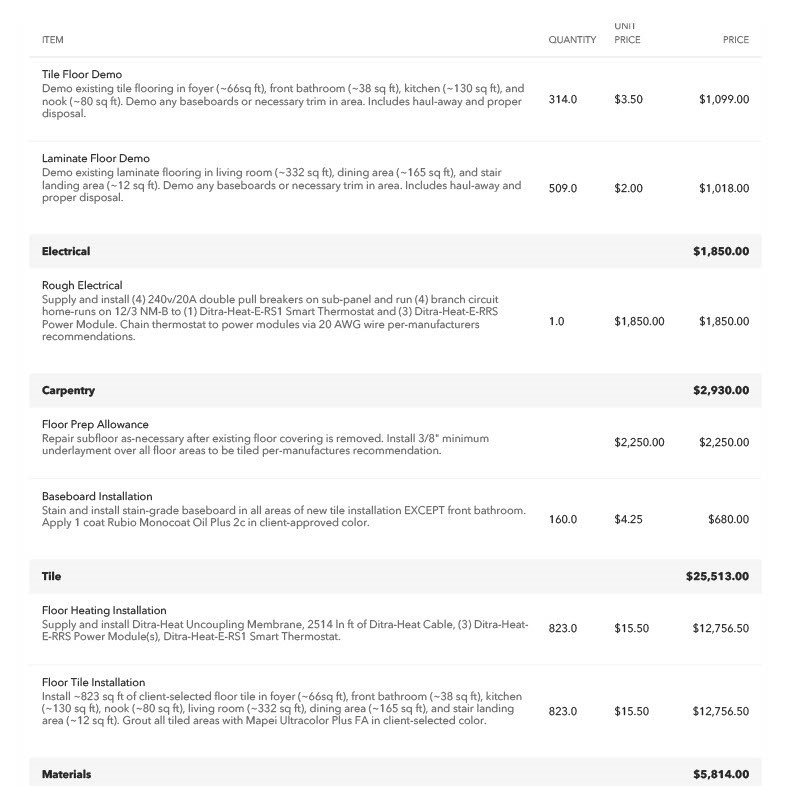
    Example of a detailed contractor estimate

    It’s always a great idea for a homeowner to obtain multiple bids on a project, but it’s just as important to know how to compare them effectively.

    A common mistake homeowners make is assuming the lowest bid is the best option. It could be considered a red flag if an estimate is significantly lower than the others. You might end up paying more in the long run if your project is run inefficiently or if you end up paying a different contractor to fix things.

    Next, you should make sure the bids include all expected costs, including materials, labor, project management/administrative costs, and all necessary permitting. A contractor may appear more affordable at first, but if they’ve left out key costs—like permits or project management costs—you could end up paying more through unexpected change orders.

    Lastly, if a bid includes allowances (commonly used for materials, such as plumbing or electrical fixtures), check that the amounts are realistic. Otherwise, this could lead to unexpected costs later.

    Making the Right Choice for Your Project

    Hiring a general contractor isn’t just about getting the job done—it’s about ensuring it’s done right, safely, and efficiently. Taking the extra time to vet your contractor and understand the process upfront can save you stress, money, and frustration down the road.

  • Celebrating Women in Construction Week

    Celebrating Women in Construction Week

    Co-Owner of Parrish Construction, Autumn Pressley at the McCarthy/Mortenson Joint Venture Gaylord Pacific Hotel and Convention Center Project Site
    Pictured: Co-Owner of Parrish Construction, Autumn Pressley at the McCarthy/Mortenson Joint Venture Gaylord Pacific Hotel and Convention Center Project Site

    What is Women in Construction Week?

    Women in Construction week is a week-long event that celebrates and advocates for women in the construction industry. This annual event was founded by the National Association of Women in Construction (NAWIC) in 1998 to spread awareness about systemic issues that affect women in a traditionally male-dominated industry.

    This year, Women in Construction Week is March 2nd–8th with the theme “Together We Rise.” Every year, this week provides free training, educational resources, and networking to help women in construction develop their professional skills and foster an inclusive workplace.

    Women in Construction: Fast Facts

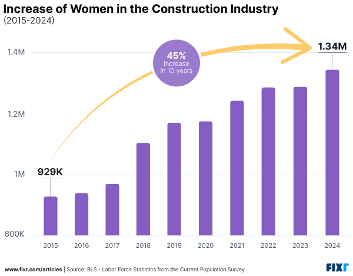
    • In the last decade, the number of women in construction has increased by 45%.1
    • As of 2025, there are over 1.3 million women employed in construction nationwide.2
    • In 2023, women made up 10.8% of the construction workforce in the United States.3
    • 39% of women in construction are in leadership roles.4
    • The gender wage gap has decreased by 16.8%.5
    Chart showing the increase of women in the construction industry from 2015 to 2024
    Source: Fixr.com — Data from the U.S. Bureau of Labor Statistics, Current Population Survey

    Challenges & Stereotypes

    Construction has typically been a male-dominated field so there are plenty of stereotypes that can create a toxic environment and make women feel isolated or underestimated. Often, women are faced with skepticism in their abilities or must prove themselves significantly more than their male counterparts. Some of the common misconceptions that women face is that they aren’t strong enough, they’re less skilled, they’re better suited for administrative and support roles, and that they are unable to lead effectively in a traditionally male-dominated field. Women may also encounter behavior from subtle microaggressions to overt harassment and without accountability measures, this often creates a hostile work environment.

    How Women Are Shaping the Future of Construction

    Despite the challenges women face, The National Association of Women in Construction continues to report a steady increase in women taking on supervisory and managerial roles. Studies and industry surveys also consistently show that women perform technical tasks and operate machinery just as effectively as their male counterparts. Research from firms like McKinsey indicate that companies with diverse leadership teams that include women are more innovative and profitable—sometimes showing a 21% higher likelihood of above-average performance compared to less diverse teams.

    Looking Ahead

    More women enter the construction industry every year who advocate for change and rise to leadership positions, so companies are finally beginning to recognize the need to create a more inclusive and supportive environment.

    As a woman co-owned small business, Parrish Construction is committed to diversity and representation in the industry, while fostering an inclusive workplace where everyone can thrive. As we continue to grow, we are dedicated to empowering women in construction and promoting continued change in the industry. One thing we know for certain is that gender doesn’t determine success—skills, passion, and dedication do.


    References

    1. Martincevic, Irena. “Fixr.com | Women in Construction Week 2024: Management Role Increases and Other Key Statistics.” Www.fixr.com, 25 Feb. 2025.
    2. Jones, Jonathan. “Cities with the Most Women in Construction [2024 Edition] – Construction Coverage.” Construction Coverage, 2 Feb. 2024.
    3. “Women in Construction Reached Record High in 2023.” Nahb.org, 10 Sept. 2024.
    4. Martincevic, Irena. “Fixr.com | Women in Construction Week 2024: Management Role Increases and Other Key Statistics.” Www.fixr.com, 25 Feb. 2025.
    5. Picatoste, X., Mesquita, A. & González-Laxe, F. “Gender wage gap, quality of earnings and gender digital divide in the European context.” Empirica 50, 301–321 (2023).
  • Product Highlight: Fab Glass and Mirror

    Product Highlight: Fab Glass and Mirror

    Fab Glass and Mirror was founded in Columbus, Ohio in 2012, which is currently where their headquarters are. They have a wide assortment of products you can buy including gym mirrors, glass boards, custom shower glass, medicine cabinets, glass railing, and more. Free shipping is offered for regular-size items and reasonably priced freight shipping for oversized items to 48 states.

    Why Choose Fab Glass?

    Quality Assurance. They don’t just stop at ASTM standards — their glass technicians inspect every piece thoroughly to ensure it exceeds standards. This includes searching for any type of defect, even if it is deemed acceptable by the ASTM. Learn more on their About Us page.

    They stand by their quality — their breakage rate is less than 1% — but they still offer a 10-year limited warranty.

    We love that Fab Glass and Mirror are environmentally responsible by upholding a meticulous packaging process that ensures your glass arrives damage-free while also minimizing the amount of waste.

    Fab Glass and Mirror isn’t just a leader in the glass industry — they’re also making a real difference in people’s lives. Co-founders Ahmed Mady and Tehmas Baig are committed to giving back. Mady has hired Afghan refugees, many of whom worked with the U.S. military, providing them with jobs, housing support, and a fresh start. Their story is proof that great companies prioritize both quality products and community impact. Read the full story in Inc. Magazine.

    The Process

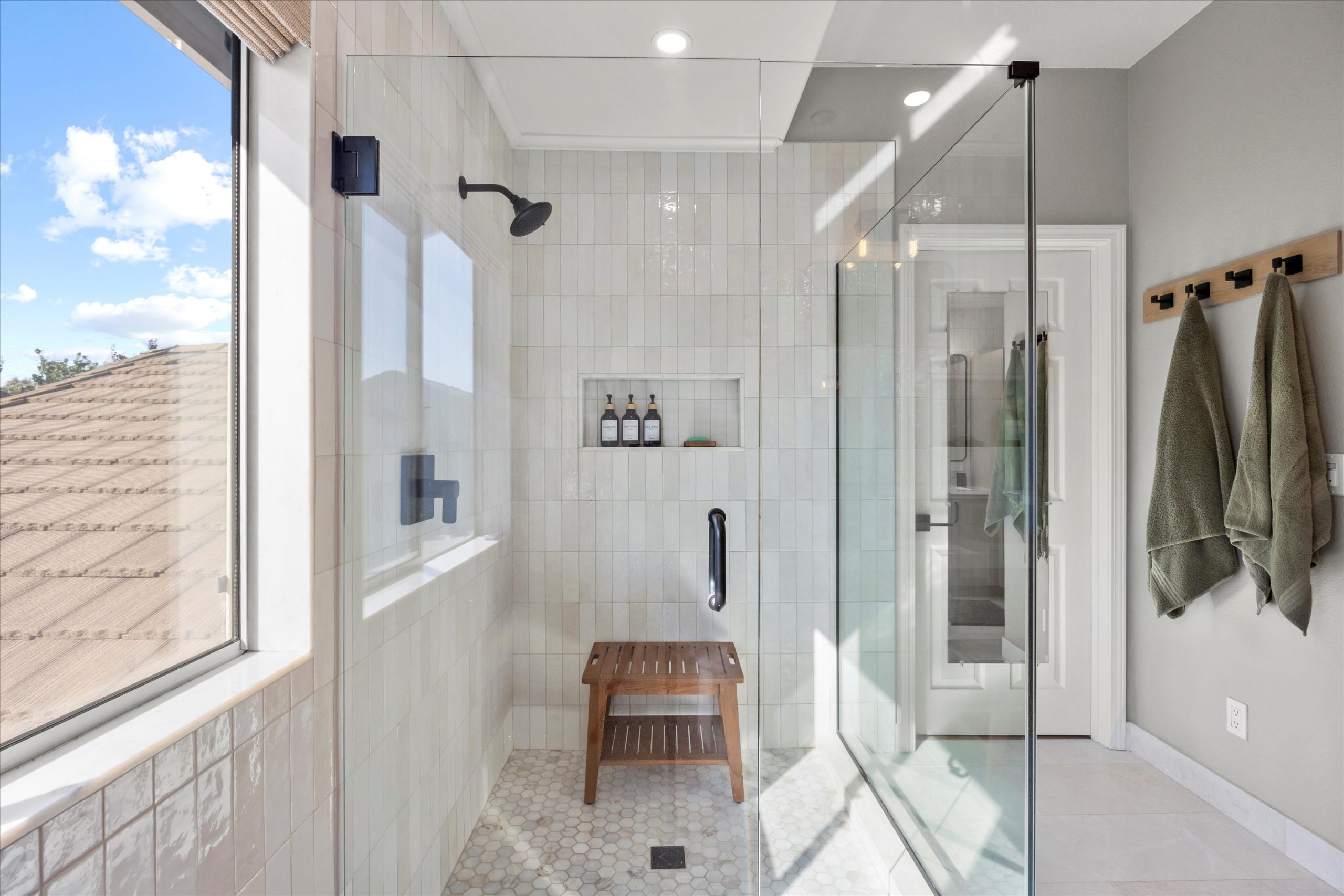
    Fab Glass and Mirror custom shower glass process

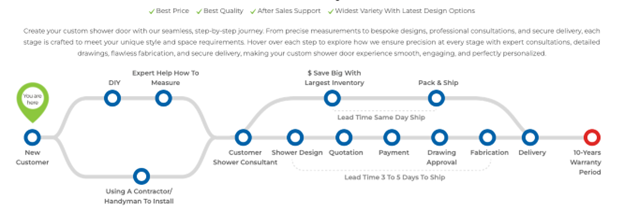
    The process starts by picking your shower glass design and finish color as well as entering in your custom measurements. Then Fab Glass and Mirror reaches out to confirm the measurements and provide shop drawings for client approval. Once approved, the order is pushed through and shipped via freight.

    We placed our order on January 21st and received it on January 27th, despite a one-day shipping delay caused by the freight company. This delay was not the fault of Fab Glass and Mirror.

    Things to Consider About Delivery

    • The freight company will only provide one person to deliver the item.
    • The freight company will make an appointment for delivery and may require customer assistance in removing the oversized item from the truck.
    • If you are unable to move the oversized item into your home or business, you must request a White Glove delivery quotation.

    Final Thoughts

    Our experience with Fab Glass and Mirror has been nothing short of excellent. From their commitment to high-quality products and sustainability to their dedication to giving back to the community, they truly stand out in the industry. The ordering process was straightforward, and despite a minor shipping delay outside their control, everything arrived in great condition.

    Their attention to detail and customer service exceeded our expectations. If you’re looking for top-tier glass products with outstanding quality and service, we highly recommend Fab Glass and Mirror. Their commitment to craftsmanship, reliability, and social impact makes them a company worth supporting.

  • Radiant Heated Floors: Warmth That Starts from the Ground Up

    Radiant Heated Floors: Warmth That Starts from the Ground Up

    Few upgrades transform a space like radiant heated flooring. Whether it’s stepping onto warm tile on a cold morning or simply enjoying the even, quiet comfort it provides, radiant heat delivers a sense of luxury that homeowners quickly come to love.

    At Parrish Construction Inc., we professionally install radiant floor heating systems throughout the Sacramento area—helping homeowners bring warmth, efficiency, and value into their remodel projects.

    The Appeal of Radiant Heat

    Radiant floor heating warms from beneath the surface, heating objects and people directly instead of relying on blowing air. The result is a quieter, cleaner, and more consistent warmth that feels natural year-round.

    Benefits include even, gentle heat that eliminates cold spots, no vents, noise, or dust circulation, low operating costs and energy efficiency, and added comfort and resale value to any space. It’s especially popular in bathrooms, kitchens, entryways, and basements—where cold floors are most noticeable.

    Types of Radiant Heating Systems

    There are two main approaches to radiant heat:

    Hydronic Systems circulate warm water through tubing beneath the floor. They’re ideal for new construction or large-area heating applications.

    Electric Systems use cable or mat heating elements under the flooring surface. They’re perfect for remodels and targeted comfort zones like bathrooms or kitchens.

    For remodel applications, electric radiant heat systems offer the best combination of comfort, control, and affordability—with minimal impact on floor height and schedule.

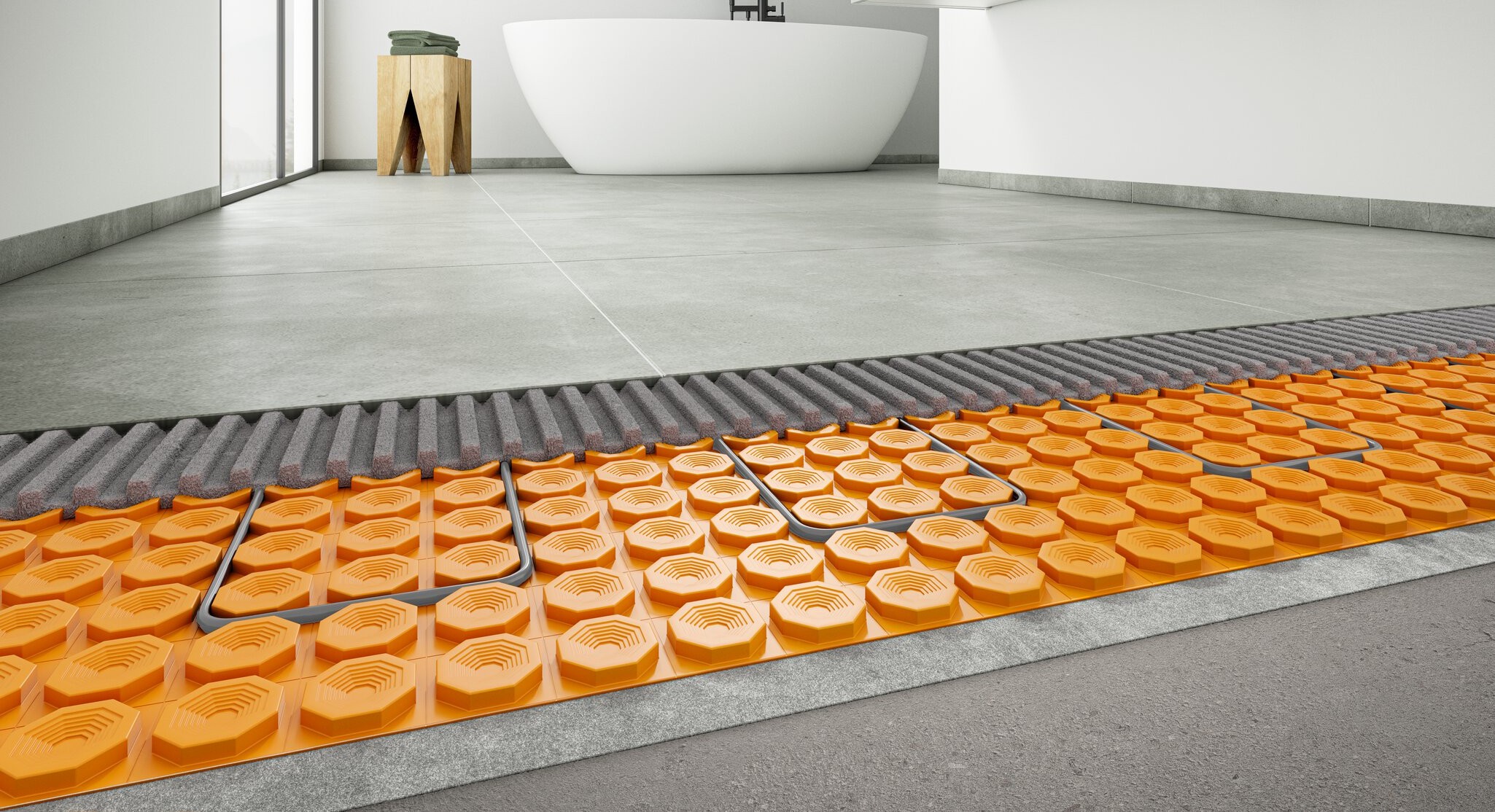
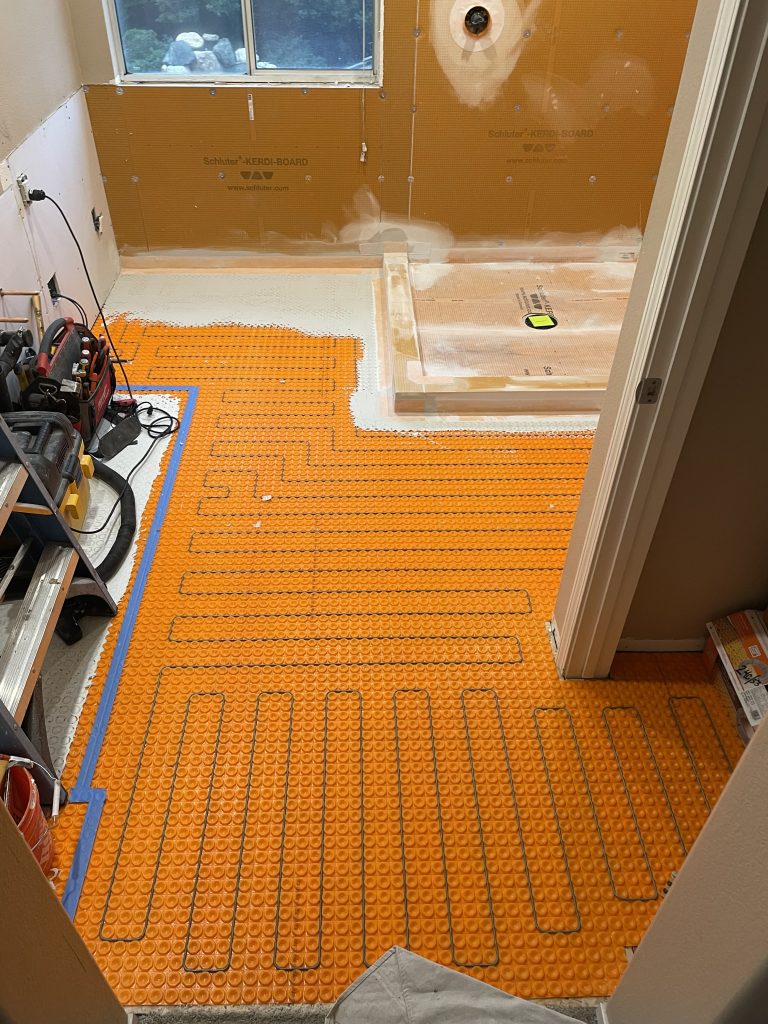
    Our Go-To Solution: Schluter® DITRA-HEAT

    • Uncoupling membrane – Protects tile from cracking due to movement
    • Integrated heating cables – Custom-fitted to your space for even warmth
    • Waterproofing layer – Keeps moisture out of subfloors for long-term durability

    We pair it with the DITRA-HEAT-E-RS1 thermostat, allowing you to program specific times, temperatures, and energy-saving schedules.

    After years of installing different systems, our preferred choice for most residential remodels is Schluter® DITRA-HEAT. This advanced electric radiant heat system combines three key functions in one:

    Energy Efficiency and Cost to Run

    Electric radiant heating is far more affordable than most homeowners expect. A typical system draws about 12 watts per square foot, making it one of the most efficient comfort upgrades you can add to your home. Even when run for several hours each day, operating costs remain minimal—often just a few cents per hour.

    For example, a 50 sq. ft. bathroom typically costs under $10 per month to heat, based on average U.S. electricity rates.

    Room SizeWatts3 Hours/DayMonthly Cost (@ $0.16/kWh)
    25 sq ft300 W$0.15/day≈ $4.50/mo
    50 sq ft600 W$0.26/day≈ $9.00/mo
    75 sq ft900 W$0.44/day≈ $13.50/mo
    100 sq ft1200 W$0.58/day≈ $17.40/mo

    Based on U.S. average electricity rate of $0.16 per kWh. Actual usage depends on thermostat settings and insulation efficiency.

    Compatible Flooring Options

    Radiant heating can be installed beneath almost any properly prepared flooring surface, including ceramic and porcelain tile, natural stone, luxury vinyl plank (LVP), engineered hardwood, laminate flooring, and certain carpeted or floating systems. Proper substrate prep ensures even heat transfer and long-term performance—something we handle as part of every installation.

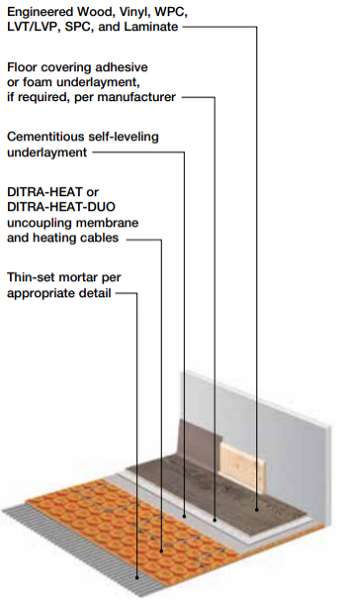
    How the System Layers Work

    The DITRA-HEAT system integrates seamlessly into a standard tile installation. The layers, from bottom to top, consist of the subfloor, thinset mortar, Schluter® DITRA-HEAT membrane, heating cable placed in the membrane channels, and finally thinset with the finished flooring on top.

    This integration keeps the floor height minimal while combining warmth, waterproofing, and crack prevention in one step.

    Frequently Asked Questions

    Can this be added without a full remodel?

    Often yes—if you’re replacing flooring, we can integrate it during that process.

    Does it heat the whole room?

    Radiant floors primarily warm the surface and the people in contact with it, but they also gently raise ambient temperature.

    Is it waterproof?

    Yes. The DITRA-HEAT membrane provides waterproofing suitable even for bathrooms and showers.

    What’s the warranty?

    Schluter® offers a 10-year system warranty, fully backed when installed to spec with authorized components.

    Step Into Everyday Comfort

    Radiant heated floors offer an unmatched blend of comfort, energy efficiency, and luxury. Whether you’re upgrading a bathroom, kitchen, or entire living area, Parrish Construction Inc. delivers expert installation, trusted materials, and lasting performance.

  • Material Considerations: Understanding the Unique Characteristics of Remodeling Materials

    Material Considerations: Understanding the Unique Characteristics of Remodeling Materials

    As part of our commitment to transparency and quality, we want to highlight a few important things to know about the materials commonly used in residential remodeling. Many of the products we work with—such as natural stone, hardwood, and handcrafted tile—are selected for their beauty, character, and uniqueness. But with that comes natural variation and certain performance traits that are important to understand before installation begins.

    This guide is designed to help set expectations and provide clarity on how these materials behave in real-world applications. Our goal is to help you feel confident in your selections and enjoy the finished product for years to come.

    Natural Stone & Natural Stone Variation

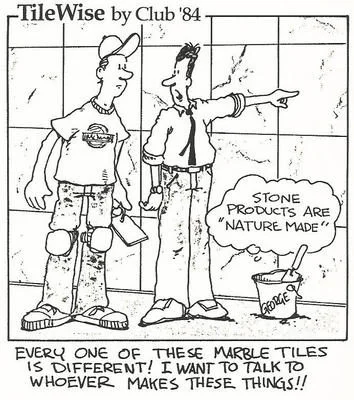
    Natural stone is a product of the earth, formed over millions of years through heat, pressure, and mineral deposits. Because of this, no two pieces are ever identical. Even when cut from the same block, stone can display dramatic shifts in veining, color tone, or texture. These natural variations are not defects; they’re part of what makes the material so special.

    The appeal of natural stone lies in its uniqueness; its organic imperfections are what give it character and charm. Clients are often surprised when the stone installed in their home doesn’t look exactly like the showroom sample. This is completely normal. Samples represent just one piece of the puzzle; your final installation will feature a full spectrum of the stone’s unique characteristics.

    Consistency is not the goal—character and individuality are. What might be considered “imperfections,” such as fissures, veining, or mineral deposits, are markers of authenticity. While we always aim to balance tones during layout, natural stone is inherently varied, and some changes in tone or pattern are to be expected and celebrated.

    Handcrafted Tile, Zellige, & Surface Irregularities

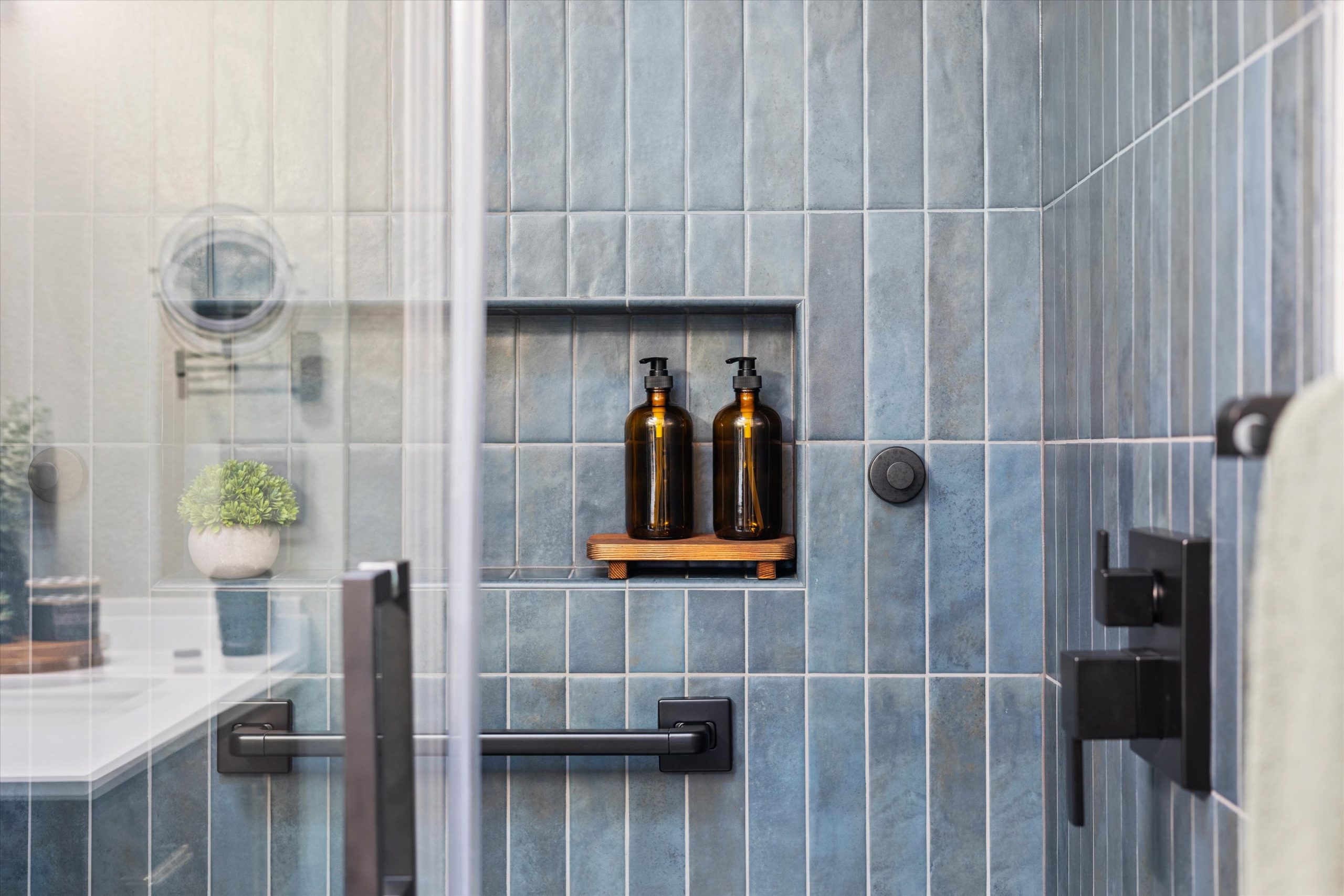
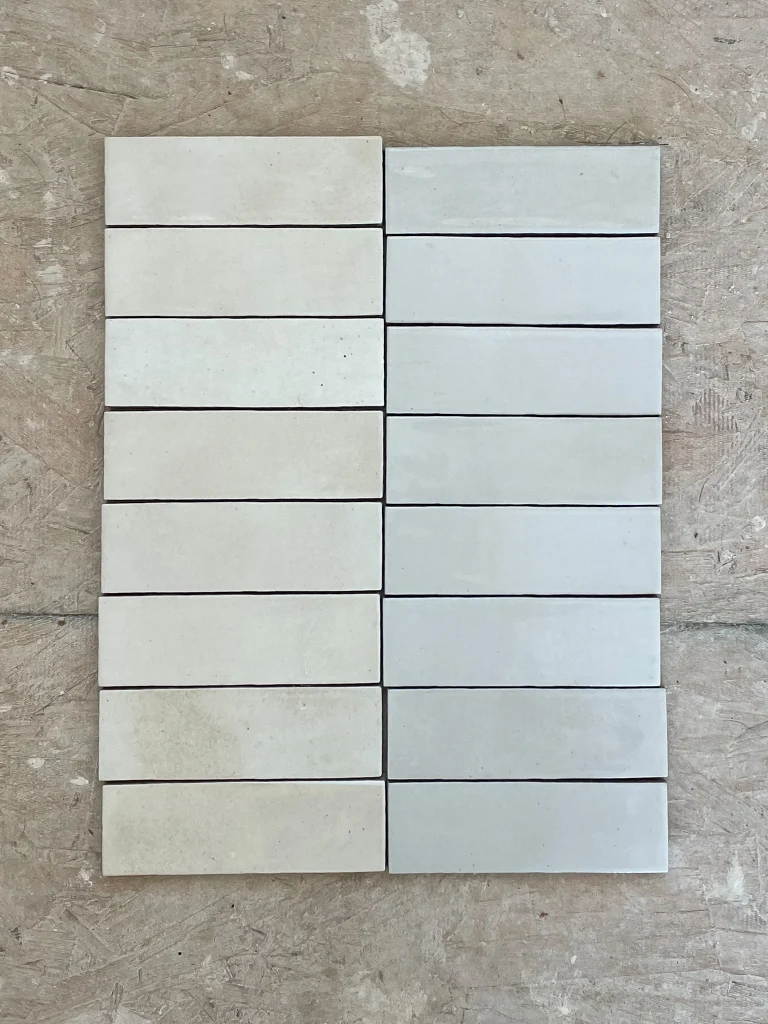
    Handmade tile such as Moroccan Zellige is prized for its imperfect, organic quality. Unlike machine-made ceramic, these tiles are hand-cut, hand-glazed, and wood-fired. This process introduces variation in shape, color depth, and surface texture. You’ll often see irregular edges, glaze pooling, pitting, crazing (fine surface cracks), and undulation across the surface. This is not a flaw—it’s the essence of what makes handcrafted tile beautiful.

    Because they are not uniform, grout lines will vary in width, and the surface won’t lay perfectly flat like a standard subway tile. Instead, the light will bounce off each one in a way that gives the installation depth and richness that can’t be replicated with mass production.

    For clients seeking a highly polished or uniform finish, Zellige may not be the right fit. But for those who appreciate artistry and texture, it offers a timeless, character-rich finish that only gets better with age.

    Edge Finishing: Mitered vs. Schluter

    When it comes to finishing the edges of Zellige or other handcrafted tile, there are two primary approaches: using a trim piece like Schluter or mitering the tile edges. Each has a distinct aesthetic and practical purpose.

    Mitered corners are a high-end detail where the edges of the tile are cut at a 45-degree angle and joined to create a clean, seamless outside corner. This method maintains the handcrafted look without introducing a modern trim element. It’s a popular choice for clients who want a more traditional or artisan feel, especially in installations where the tile is meant to be the focal point.

    On the other hand, Schluter edging or other metal trim offers a more modern and streamlined look. These pieces come in a variety of finishes (like brushed nickel, matte black, or brass) and provide a durable, low-maintenance solution for protecting tile edges. Schluter is also a great choice if you love the irregular look of the tile face but prefer a more finished or uniform edge.

    Ultimately, the choice comes down to style and budget. Mitering emphasizes craftsmanship and cohesion, while Schluter adds a contemporary design detail and practical edge protection. Both are valid—just different ways to finish a beautiful tile installation.

    Natural Stone Versus Manufactured Stone

    Natural stone is sourced directly from the earth, while manufactured stone is made from cement, aggregates, and pigments, molded to replicate the look of real stone. Both have their place in modern construction, but they differ in performance, aesthetics, and longevity.

    Natural stone is inherently unique. It carries geological history in every slab, with layered movement, color shifts, and mineral veining that’s impossible to mass-produce. It tends to be heavier, more durable, and when properly maintained can last generations.

    Quartz vs. Quartzite

    One common point of confusion is quartz vs. quartzite. While their names sound similar, they are completely different materials. Quartzite is a natural stone formed from sandstone and intense heat and pressure within the earth, resulting in a hard, dense surface with beautiful, unpredictable veining. Quartz, on the other hand, is a manufactured surface made from crushed natural quartz combined with resins and pigments to create a consistent, non-porous material.

    Quartz tends to be lower maintenance and more uniform in appearance, while quartzite offers the raw beauty and uniqueness of natural stone, but usually requires sealing and a bit more care.

    When choosing between natural and manufactured stone, it’s important to consider both budget and expectations around appearance and maintenance. Manufactured options offer consistency, ease of care, and affordability. Natural stone offers authenticity, variation, and a timeless quality that simply can’t be replicated. Neither is “better”—just different, with their own strengths depending on the space and the goals of the project.

    Color Movement & Variation in Plaster

    Plaster finishes—especially Venetian plaster and lime-based plasters—are dynamic by nature. They’re not flat or static like paint. These materials are applied in layers using hand trowels, with subtle shifts in pressure, angle, and timing that produce rich, multi-dimensional surfaces.

    As the plaster cures, it undergoes chemical changes that contribute to tonal variation. You might see areas of soft clouding, depth, or warmth that weren’t visible during application. These fluctuations are known as color movement, and they’re a hallmark of quality craftsmanship—not something to be corrected.

    In certain lighting, this movement becomes even more pronounced. The finish may appear different throughout the day, depending on the angle of light or time of year. This interaction with the environment is intentional and gives the material its luxurious, ever-changing character.

    If you value consistency over character, plaster may not be the right material—but for those seeking elegance, softness, and depth, there’s nothing else like it.

    Porcelain Versus Ceramic Tile

    At a glance, porcelain and ceramic tiles may appear similar, but they have important differences that affect durability, appearance, and cost.

    Porcelain is made from finer, denser clay and fired at a higher temperature than ceramic, making it harder, more water-resistant, and more suitable for high-traffic or wet areas like bathrooms, mudrooms, or patios. Many porcelain tiles are full body, meaning the color runs through the entire tile, which can be helpful if the surface ever chips. Because of its strength and durability, porcelain is often more expensive and can be more difficult to cut and install.

    Ceramic tile, while also durable and long-lasting, is more porous and better suited for dry, lower-traffic areas like backsplashes or powder rooms. It tends to be easier to work with and may offer a slightly lower price point. However, ceramic can chip more easily on the edges, and the color underneath is often different from the glazed surface, which can make chips more visible.

    It’s also important to understand that variation is normal across both types of tiles. Size, thickness, and surface flatness can vary slightly between pieces, especially with handmade or artisanal lines. Similarly, lippage (where the edge of one tile is slightly higher or lower than the one next to it) is a natural part of tile installation and is even more likely with larger format tiles or tile with some inherent bowing.

    Understanding Industry Standards & Visual Expectations

    In residential remodeling, quality is measured not only by precision and craftsmanship, but also by what’s reasonable and realistic. Industry standards exist to guide both installers and clients in understanding what’s acceptable, especially for finishes like tile, paint, cabinetry, drywall, and flooring.

    One of the most referenced standards comes from the Tile Council of North America (TCNA) and NKBA guidelines, which state that finished surfaces should be evaluated from a normal viewing distance—typically 3 feet away under normal lighting conditions. This means that minor surface imperfections that are not visible from this distance are considered acceptable.

    These standards help ensure fairness and clarity during final walkthroughs. They take into account the fact that many materials, especially natural or hand-applied ones, are not intended to be viewed under magnification or harsh directional light. Even the most meticulous installation will show some minor irregularities when inspected up close or under specialty lighting.

    Working Within Existing Structures

    When remodeling an existing home—especially one that’s older—it’s important to understand that we are working within the constraints of the original construction. Very few homes are perfectly plumb, level, or square. Walls may bow, floors may slope, and framing irregularities may not be visible until demolition is complete.

    While we always strive for clean lines, level surfaces, and precise finishes, we are often blending new materials and modern expectations into older frameworks. In these cases, absolute perfection isn’t always achievable without extensive reconstruction that may be outside the scope or budget of the project.

    Our work is held to the professional industry standard of quality and finish, meaning that completed work should appear consistent and appropriate when viewed from a normal distance and under standard lighting. Our goal is always to deliver a beautiful, lasting result that aligns with both aesthetic goals and practical expectations.